
Home Energy Storage Battery Safety: What Causes Thermal Runaway and How Modern Battery Systems Reduce Fire Risks

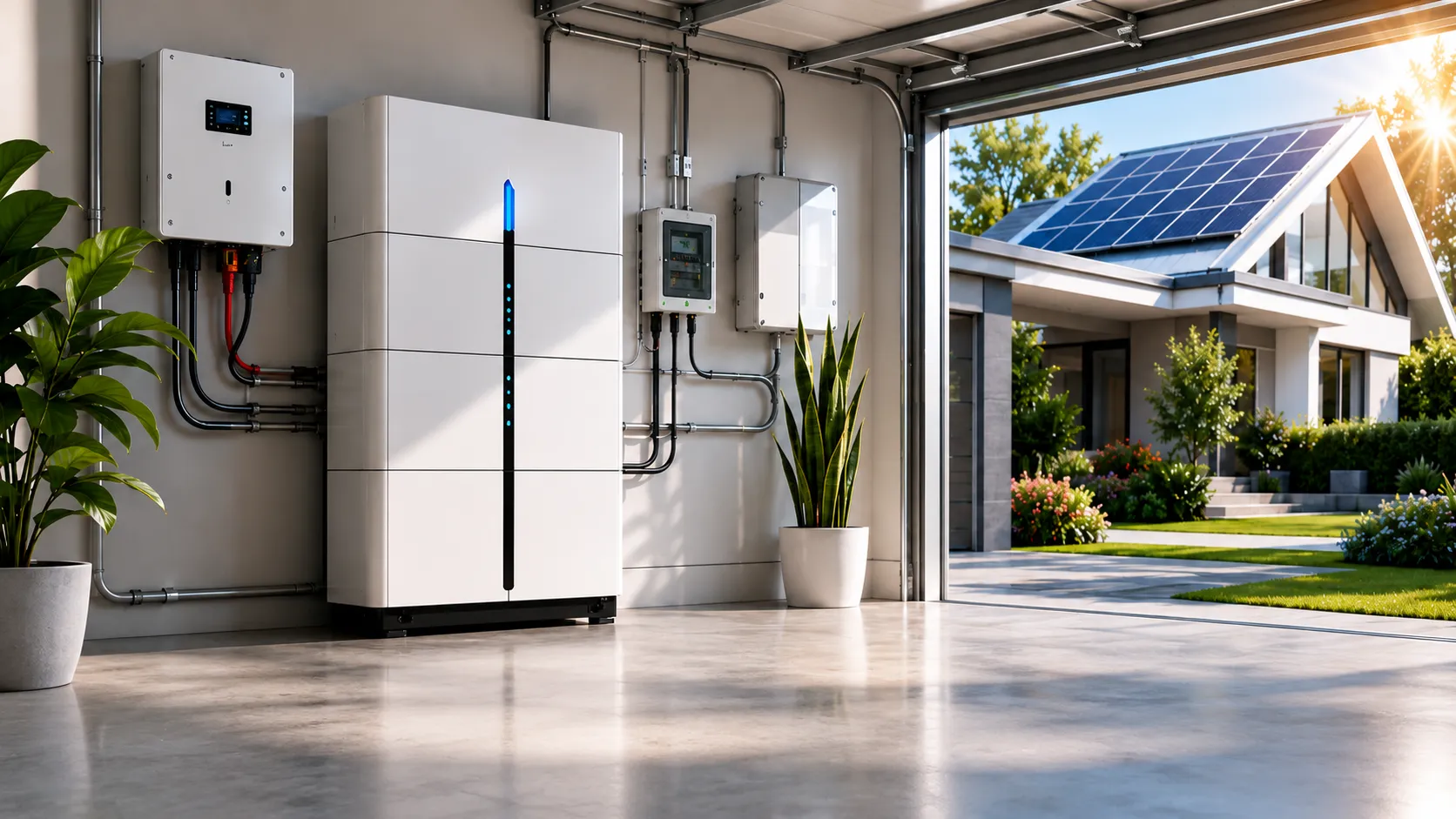
For many households, a home energy storage battery is no longer a luxury product. It is becoming part of modern residential energy infrastructure. Homeowners use battery systems to store solar power, reduce electricity costs, improve backup power reliability and become less dependent on the grid.
As residential battery storage becomes more common, one question becomes increasingly important: how safe is a home battery system when it is installed close to living spaces, garages or utility rooms?
The concern is reasonable. Lithium batteries store a large amount of energy in a compact structure. If a battery cell is damaged, poorly manufactured, incorrectly charged, overheated or improperly installed, the system may face abnormal safety risks. The most serious failure mechanism is thermal runaway, a self-accelerating process in which heat triggers chemical reactions that generate even more heat.
However, the right conclusion is not that home energy storage batteries are inherently unsafe. The right conclusion is that battery safety must be engineered at system level. A safe residential energy storage battery depends on chemistry selection, cell consistency, BMS protection, battery thermal management, pack structure, manufacturing quality, third-party testing and correct installation.
This article explains what thermal runaway is, why LiFePO4 batteries are widely used in residential energy storage, how BMS and pack design reduce fire risks, what international standards say, and how THOR Power supports safer custom home energy storage battery projects for OEM and ODM customers.
Quick Answer
A home energy storage battery can catch fire, but serious fire events are rare in a properly engineered system. The main hazard is thermal runaway, where a cell generates heat faster than it can dissipate it. For LiFePO4 (LFP) chemistry, thermal runaway typically begins at a higher onset temperature than nickel-based (NMC) chemistries — values commonly reported in the literature are on the order of 200 °C for LFP versus roughly 150 °C for many NMC cells, though the exact figures depend on cell design, state of charge and test method — which is one reason LFP is preferred for residential storage. Real-world safety depends on cell quality, BMS protection, thermal management, pack design and correct installation, not chemistry alone.
1. Why Home Energy Storage Battery Safety Matters More Than Ever
The global growth of solar power and backup energy systems has changed how families think about electricity. A home energy storage and backup power battery can store energy when solar production is high and release it when electricity demand increases or grid power is unavailable. This makes residential battery storage valuable, especially in regions with high electricity prices, unreliable grids or strong rooftop solar adoption.
But unlike a small consumer power bank, a home battery system may store several kilowatt-hours or even tens of kilowatt-hours of energy. It may be installed in a garage, basement, equipment room or outdoor enclosure close to the home. This makes safety a core purchasing factor, not a secondary feature.
A safe system must remain stable during normal charging and discharging, but it must also behave predictably when something goes wrong. Good engineering does not assume perfect conditions. It considers overload, aging, cell imbalance, connector failure, high ambient temperature, inverter communication faults, installation errors and possible mechanical damage.
For OEM brands and energy storage integrators, home energy storage battery safety is also a brand risk issue. A single fire event can damage customer trust, trigger warranty claims and affect market access. This is why modern residential energy storage projects increasingly evaluate safety together with capacity, cycle life, cost and appearance.
2. Can Home Energy Storage Batteries Catch Fire?
Yes, a home energy storage battery can catch fire under abnormal conditions. But in a properly designed, manufactured, installed and operated system, serious fire events should be rare. Modern lithium battery systems are not designed around a single protection device. They use multiple protection layers to reduce the probability of failure and limit the consequence if a localized fault occurs.
Common risk factors include internal short circuits, severe overcharging, high discharge current, mechanical damage, poor cell consistency, improper BMS settings, loose electrical connections, inadequate thermal design and incorrect installation. In many real incidents, one single cause is not enough to explain the fire. Several weaknesses often combine: a stressed cell, poor heat dissipation, insufficient monitoring and delayed isolation.
This is why home battery fire prevention should begin before the system is installed. It starts with cell selection, continues through pack design and BMS integration, and ends with installation practices and maintenance. Fire suppression can be useful, but it should be the last layer of defense, not the main safety strategy.
3. What International Standards Tell Us About Battery Safety
Battery safety should not be based on marketing language. It should be based on engineering validation, recognized standards and research into failure mechanisms. Several organizations and standards are especially relevant to residential energy storage battery safety.
UL 9540A and UL 9540B. UL Solutions provides the UL 9540 family of safety evaluation methods for energy storage systems. UL 9540A is a test method for evaluating thermal runaway fire propagation in battery energy storage systems. UL also describes UL 9540B as a residential ESS fire testing protocol that addresses more robust ignition scenarios and enhanced acceptance criteria for large-scale fire propagation characteristics.
IEC 62619:2022 specifies requirements and tests for safe operation of secondary lithium cells and batteries used in industrial applications, including stationary applications. For stationary energy storage batteries, it is one of the important international references for cell and battery safety.
NFPA 855 focuses on installation safety for stationary energy storage systems. This is important because a well-designed battery can still become unsafe if it is installed in the wrong environment, too close to ignition sources, without suitable spacing, ventilation, electrical protection or emergency planning.
UN38.3 is not an installation standard. It is a transportation safety requirement for lithium cells and batteries under the UN Manual of Tests and Criteria. It matters because energy storage batteries must often be shipped internationally before installation. Transportation testing helps verify that lithium batteries can withstand conditions such as altitude simulation, thermal cycling, vibration and shock.
GB 44240-2024. China’s GB 44240-2024, implemented on August 1, 2025, sets safety requirements for secondary lithium cells and batteries used in electrical energy storage systems. For suppliers serving global markets, standards such as GB 44240-2024 reflect the broader industry trend toward more formal, mandatory safety requirements for energy storage lithium batteries.
The International Energy Agency’s Batteries and Secure Energy Transitions report also highlights how batteries are becoming a critical technology for the energy transition. As batteries become more important to electricity systems, safety, reliability, manufacturing quality and market confidence become increasingly important.
The shared message is clear: safe battery systems are not created by one component alone. They are created by chemistry selection, controlled manufacturing, system-level testing, installation rules and continuous engineering improvement.
4. What Is Thermal Runaway in Lithium Batteries?
Short answer: Thermal runaway is a self-heating chain reaction inside a battery cell, in which rising temperature triggers internal reactions that release still more heat. Once it starts, the cell becomes its own heat source, so simply removing the charger may not stop it — which is why prevention and early detection matter far more than reacting after it begins.
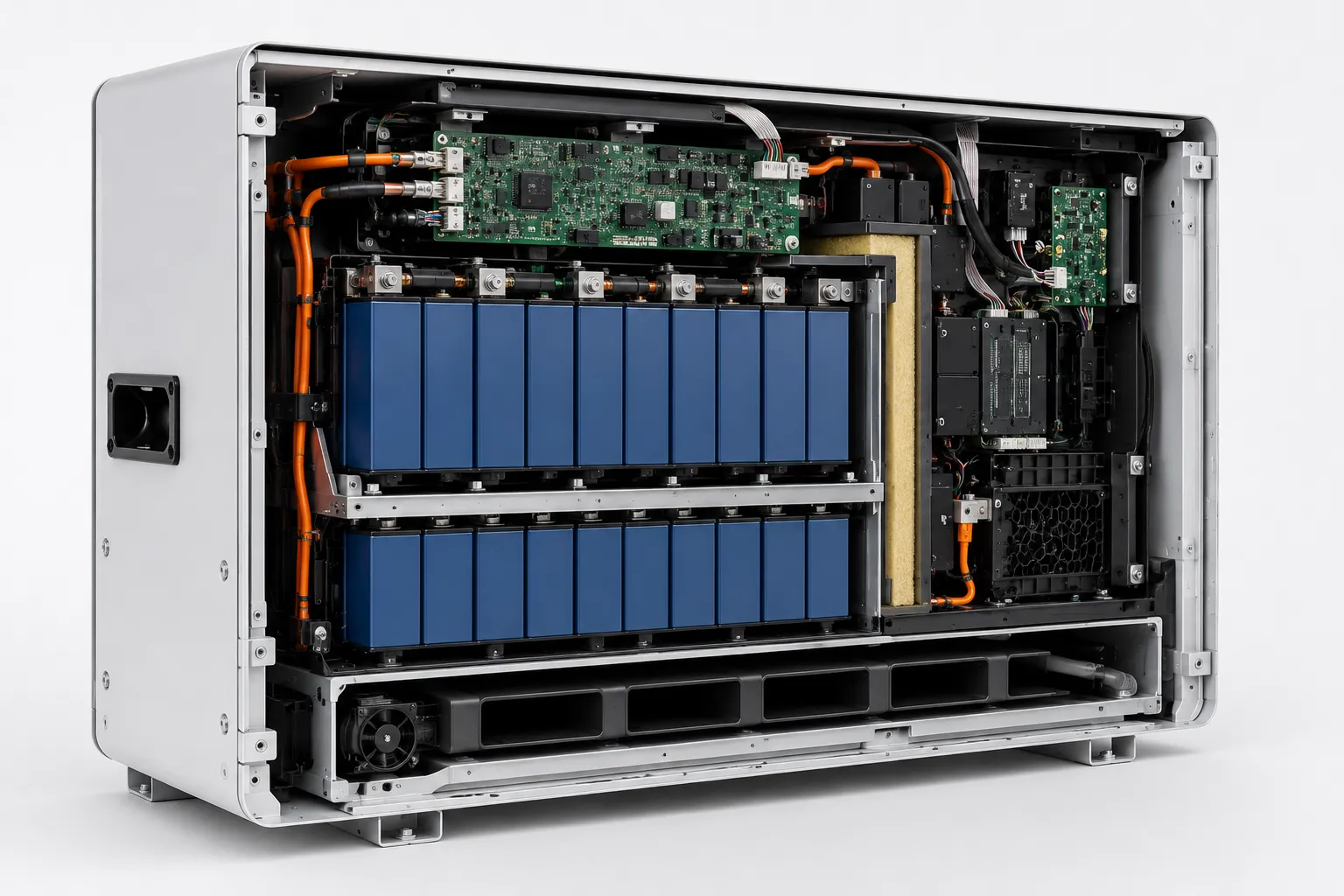
Thermal runaway is a self-accelerating failure process inside a lithium battery cell. It begins when internal heat generation exceeds the battery’s ability to release heat. Once the temperature rises beyond a certain point, internal materials begin to decompose and release additional heat. This heat triggers more reactions, which create still more heat.
In simple terms, thermal runaway is dangerous because the battery becomes its own heat source. After the process has developed, simply disconnecting the charger or inverter may not be enough to stop the internal reaction.
A typical thermal runaway process may include separator shrinkage, internal short circuit, electrolyte decomposition, gas generation, pressure increase, venting, smoke, flame or propagation to neighboring cells. The exact behavior depends on chemistry, state of charge, cell format, pack design, ventilation and surrounding materials.
For home energy storage batteries, preventing thermal runaway is far better than trying to control it after it begins. The earlier an abnormal temperature rise is detected and limited, the better the safety outcome.
| Safety characteristic | LiFePO4 (LFP) | NMC (nickel-based) |
|---|---|---|
| Typical thermal runaway onset temperature (varies by cell design & test method) | Higher — commonly reported on the order of 200 °C | Lower — commonly reported on the order of 150 °C |
| Oxygen release during decomposition | Minimal — more stable cathode | Releases oxygen, supporting combustion |
| Peak temperature during thermal runaway | Generally lower | Generally higher |
| Typical cycle life | Long (commonly 3,000–6,000+ cycles) | Shorter (commonly 1,000–2,000 cycles) |
| Energy density | Lower | Higher |
| Common use in residential ESS | Widely preferred for safety | Less common for home storage |
5. How Thermal Runaway Develops Inside a Home Battery System
Thermal runaway rarely appears without warning. In many cases, it develops through stages.
The first stage is heat accumulation. During normal charging and discharging, batteries produce heat. If the pack is well designed, this heat is dissipated through the cell structure, module spacing, enclosure and cooling pathway. If the current is too high, ambient temperature is too high, or heat dissipation is poor, the cell may gradually become hotter than expected.
The second stage is internal instability. As temperature rises, cell materials become less stable. The separator may weaken, electrolyte reactions may accelerate and internal resistance may increase. This can create a feedback loop where heat generation increases faster than cooling.
The third stage is thermal runaway. At this point, internal reactions become self-sustaining. The cell may vent hot gas and release smoke or flame. In a poorly designed battery pack, the heat may spread to neighboring cells or modules. In a better design, thermal insulation, spacing, module separation and electrical isolation help limit propagation.
This is the reason modern residential energy storage safety focuses on early warning, power limitation, abnormal module isolation and thermal propagation prevention.
6. Why LiFePO4 Batteries Are Widely Used for Residential Energy Storage
LiFePO4, also known as lithium iron phosphate or LFP, has become one of the most common chemistries for home energy storage batteries. The reason is not only cost or cycle life. Safety is a major factor.
Compared with many nickel-based lithium-ion chemistries, LiFePO4 generally offers better thermal stability and a more stable cathode structure at elevated temperatures. It is less likely to release oxygen during decomposition, which helps reduce the risk of violent combustion under abuse conditions.
This does not mean LiFePO4 battery safety is automatic. A poorly designed LFP battery pack can still become unsafe if cells are inconsistent, the BMS is weak, wiring is poor or the enclosure has inadequate thermal design. But when combined with proper engineering, LiFePO4 is highly suitable for residential energy storage because it supports long cycle life — commonly rated at 3,000 to 6,000 or more full cycles — stable operation and improved abuse tolerance.
For homeowners and OEM brands, the key point is simple: chemistry matters, but chemistry alone is not enough. A safe LiFePO4 home battery system still requires quality cells, reliable BMS protection, good thermal design and disciplined manufacturing control.
7. Battery Cell Quality: The First Line of Defense
Many people assume the BMS is the most important safety component. The BMS is essential, but the first line of defense is the battery cell itself. If the cells are inconsistent or poorly manufactured, every other part of the system must work harder to compensate.
Cell consistency is especially important in home battery systems because many cells are connected in series and parallel. This applies to prismatic LFP cells as well as cylindrical formats such as 18650 / 21700 battery packs. Cells in the same pack should have closely matched capacity, voltage, internal resistance and self-discharge behavior. If one cell ages faster than the others, it may experience higher stress during charging and discharging.
Manufacturing quality also matters. Electrode coating, calendering, slitting, stacking or winding, electrolyte filling, formation, aging and capacity grading all influence long-term reliability. Small process differences may not be visible during early testing, but they can become important after years of daily cycling.
Incoming inspection is therefore critical. A responsible battery pack manufacturer should check open-circuit voltage, internal resistance, capacity, dimensions, appearance and batch consistency before cells enter assembly. Safe battery design starts before the first weld is made.
8. How BMS Protection Reduces Home Battery Fire Risk
A Battery Management System is the control center of a home energy storage battery. It monitors the system and helps keep the battery inside its safe operating window.
Typical home battery BMS protection includes overcharge protection, over-discharge protection, over-current protection, short-circuit protection, temperature monitoring, cell balancing, fault diagnosis, SOC estimation, SOH estimation and communication with the inverter or energy management system.
The most valuable BMS function is early detection. If one module becomes hotter than expected, one cell group drifts in voltage, or charge and discharge current exceed the design limit, the BMS can reduce power, stop charging, disconnect the pack or send a fault message before the condition becomes dangerous.
However, it is important to avoid a common misunderstanding: a BMS cannot guarantee safety by itself. The BMS is one layer in a larger safety system. It must work together with stable cell chemistry, quality cells, proper fusing, thermal management, mechanical protection, correct installation and well-engineered connector, wire and PCM/BMS design.
9. Why Thermal Management Matters More Than Fire Suppression
Fire suppression receives attention because it is dramatic. Thermal management is less visible, but it is usually more important. The safest home energy storage battery is not the one that waits for a fire and then tries to suppress it. The safest battery is the one engineered to prevent abnormal heat from developing in the first place.
Effective battery thermal management may include optimized cell spacing, heat conduction pathways, temperature sensors, module-level monitoring, airflow design, enclosure ventilation, insulation materials and charging strategies that reduce stress under high-temperature conditions.
A well-designed thermal system reduces localized hot spots. It also improves cycle life because heat accelerates battery aging. For residential ESS, where users expect long service life, thermal design is both a safety issue and a reliability issue.
Fire suppression interfaces may still be useful in some projects, especially larger or more complex systems. But they should be treated as the final barrier. Prevention, detection and isolation should come first.
10. How Battery Pack Design Helps Prevent Thermal Propagation
Even with high-quality cells and a strong BMS, responsible engineering assumes that an individual cell failure may still occur. The key question is whether one failed cell can trigger a system-level event.
Battery pack design plays a major role in thermal propagation prevention. Modular architecture can separate the system into smaller functional units. Thermal barriers and controlled spacing can slow heat transfer. Mechanical enclosures can protect cells from impact, moisture and contamination. Electrical isolation devices, fuses, contactors and disconnect mechanisms can limit fault energy.
For residential battery storage safety, physical layout is just as important as electrical design. Heat, flame and hot gases do not follow wiring diagrams. They move through space. This is why module separation, thermal insulation, venting paths and enclosure design must be considered during pack development.
Good pack design turns a possible cell-level failure into a contained event instead of a chain reaction.
11. How THOR Power Supports Safer Home Energy Storage Projects
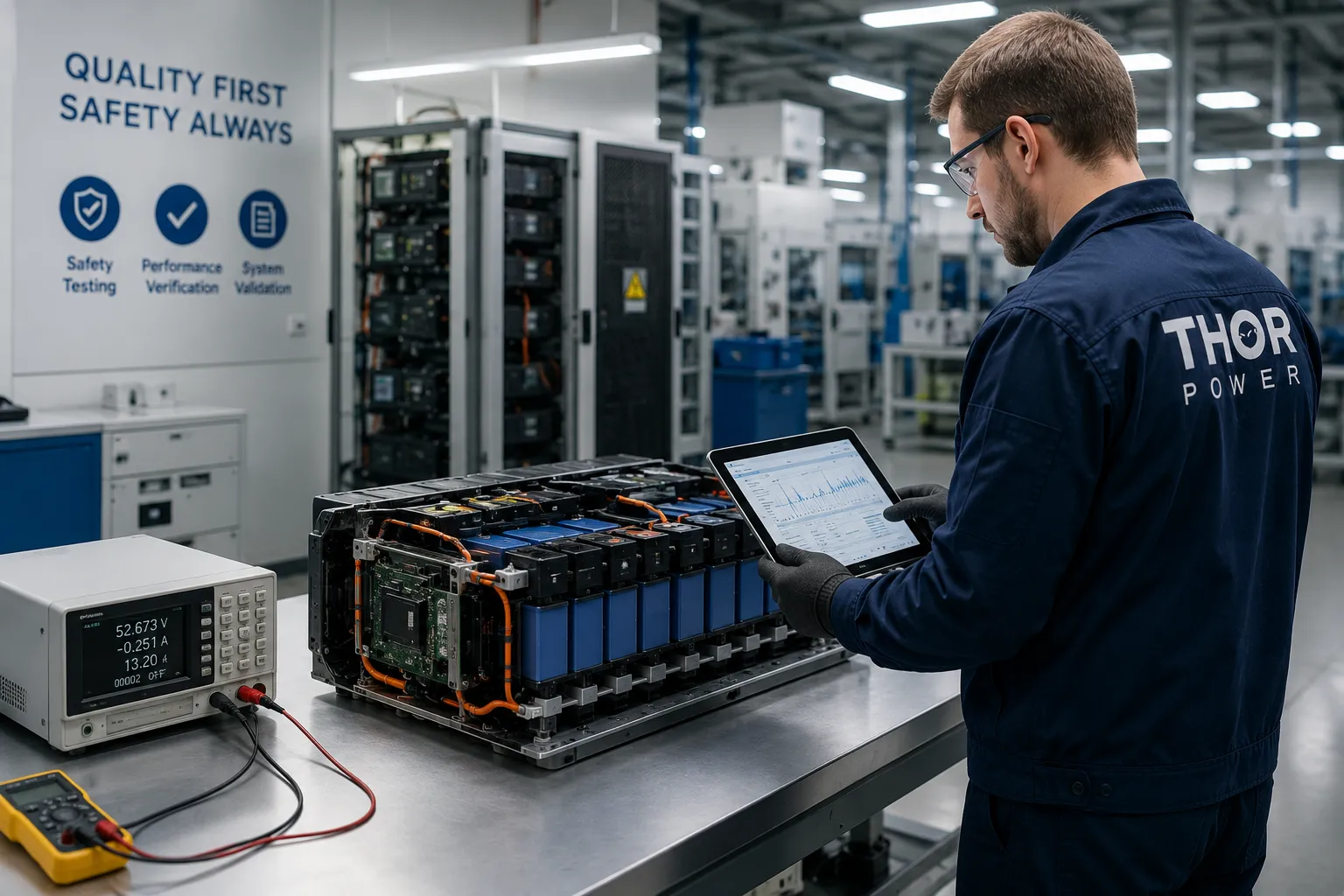
At THOR Power, home energy storage battery safety is treated as an engineering process, not a single feature. We support OEM and ODM customers through the full custom battery project process, from requirement review to pack customization, sample development and long-term production follow-up.
Depending on project requirements, THOR Power can support LiFePO4 battery pack customization, cell selection, BMS configuration, temperature monitoring, connector and cable customization, housing structure review, prototype development and manufacturing quality control.
Our approach is not to claim that one component can solve every safety issue. Instead, we help customers evaluate the full battery system: application load, voltage platform, capacity target, charge and discharge current, installation environment, communication protocol, safety documentation and long-term supply requirements.
For residential energy storage projects, this system-level approach is especially important. A battery designed for backup power, solar storage, portable energy equipment or small distributed ESS may require different BMS settings, enclosure design, connector layout, certification support and thermal management strategy. For non-standard structures and project-specific requirements, THOR Power also provides custom special battery pack development.
THOR Power can also support project documentation such as UN38.3 and MSDS according to the battery model and transportation requirements. For market-specific certifications, customers should confirm the final certification scope based on the complete system, inverter, installation location and target market regulations.
The goal is simple: help customers develop safer, more reliable and more manufacturable home energy storage battery solutions without overstating what any single protection technology can do.
Key Takeaways for Buyers and OEM Brands
- Home energy storage batteries can be safe when they are properly designed, manufactured, tested, installed and maintained.
- Thermal runaway is a preventable engineering challenge, not an inevitable result of using lithium batteries.
- LiFePO4 chemistry offers important safety advantages for residential energy storage, but it still requires proper BMS, pack design and quality control.
- A BMS is essential, but it is not the whole safety system.
- Thermal management and thermal propagation prevention are more important than relying only on fire suppression after overheating occurs.
- International standards such as UL 9540A, UL 9540B, IEC 62619, NFPA 855, UN38.3 and GB 44240-2024 provide useful safety references for buyers and manufacturers.
- Choosing an experienced battery engineering partner is as important as choosing the battery chemistry itself.
Conclusion
Home energy storage battery safety is becoming one of the most important topics in residential energy storage. As more households adopt solar batteries and backup power systems, buyers must look beyond capacity, price and appearance. They need to understand how the battery is engineered.
Thermal runaway in lithium batteries is serious, but it is not mysterious. It is a chain reaction that can be reduced through high-quality cells, stable LiFePO4 chemistry, intelligent BMS protection, effective battery thermal management, strong pack design, reliable manufacturing and proper installation.
For OEM and ODM customers, the safest product strategy is to build safety into the battery from the beginning. At THOR Power, we support custom home energy storage battery projects with an engineering-first mindset, helping customers balance safety, performance, cost and long-term supply reliability. If you are planning a residential energy storage project, you can contact our battery engineering team to review your requirements.
Energy independence is valuable. But in every residential energy storage project, safety must come first. Review our in-stock energy storage battery models when you are ready to move from planning to sourcing.
Get a Custom Home Energy Storage Battery Solution
Tell us your application, capacity target, voltage platform and installation environment. Our engineers will help you match the right LiFePO4 cells, BMS protection and pack structure — with samples, UN38.3/MSDS support, and stable mass production.
Talk to a Battery EngineerFAQ: Home Energy Storage Battery Safety
Can home energy storage batteries catch fire?
Yes. They can catch fire under abnormal conditions such as internal short circuit, severe overcharging, poor installation, mechanical damage or thermal runaway. Proper cell selection, BMS protection, thermal management and installation reduce the risk significantly.
What causes thermal runaway in lithium batteries?
Thermal runaway occurs when internal heat generation exceeds heat dissipation. The rising temperature triggers chemical reactions that generate more heat, gas and pressure, potentially leading to smoke, venting or fire.
Are LiFePO4 batteries safer than other lithium-ion batteries?
LiFePO4 batteries generally provide better thermal stability than many nickel-based lithium chemistries, which is why they are widely used in residential energy storage. However, safe pack design and BMS protection are still required.
Does a BMS prevent battery fires?
A BMS helps reduce fire risk by monitoring voltage, current and temperature and disconnecting the battery under abnormal conditions. But it cannot replace good cell quality, pack design, thermal management and correct installation.
What is the difference between UL 9540A and UL 9540B?
UL 9540A evaluates thermal runaway fire propagation in battery energy storage systems. UL 9540B is focused on residential ESS fire testing with more robust ignition scenarios and acceptance criteria for large-scale fire propagation behavior.
Why is battery thermal management important?
Battery thermal management keeps cells within safe operating temperature ranges, reduces hot spots, slows aging and lowers the probability of thermal runaway.
What certifications should a home energy storage battery supplier support?
Relevant references may include UL 9540 series requirements, IEC 62619, UN38.3, CE or other regional compliance requirements. The exact scope depends on the cell, pack, inverter, system design and target market.
How should buyers choose a safe residential energy storage battery supplier?
Buyers should evaluate chemistry, cell quality, BMS capability, thermal design, pack structure, quality control process, documentation support, engineering communication and long-term production reliability.
References
- UL Solutions. UL 9540A Test Method for Battery Energy Storage Systems (BESS).
- UL Solutions. Safety Testing for Residential Energy Storage Systems (ESS), including the UL 9540B protocol description.
- International Electrotechnical Commission. IEC 62619:2022, safety requirements for secondary lithium cells and batteries used in industrial applications, including stationary applications.
- National Fire Protection Association. NFPA 855, Standard for the Installation of Stationary Energy Storage Systems.
- United Nations Economic Commission for Europe. UN Manual of Tests and Criteria, Sub-section 38.3, lithium metal and lithium ion batteries.
- Standardization Administration of China. GB 44240-2024, Secondary lithium cells and batteries used in electrical energy storage systems — Safety requirements.
- International Energy Agency. Batteries and Secure Energy Transitions, 2024.
- UL Fire Safety Research Institute. Energy storage system installation testing and thermal runaway propagation research updates.

Dr. Maximilian Weber is THOR Power's Chief Scientist and a senior expert in lithium battery technology. His technical review focuses on battery safety, performance optimization, energy density and custom battery solution development.
Last technical review: July 2026

Victor Xiong holds a Master's degree from The Chinese University of Hong Kong, Shenzhen. He leads THOR Power's OEM Division and focuses on custom battery solutions for global device brands, product developers and industrial customers.