
LiPo Battery Safety Engineering Guide: Thermal Runaway Causes, OEM Design Risks and Fire-Risk Reduction

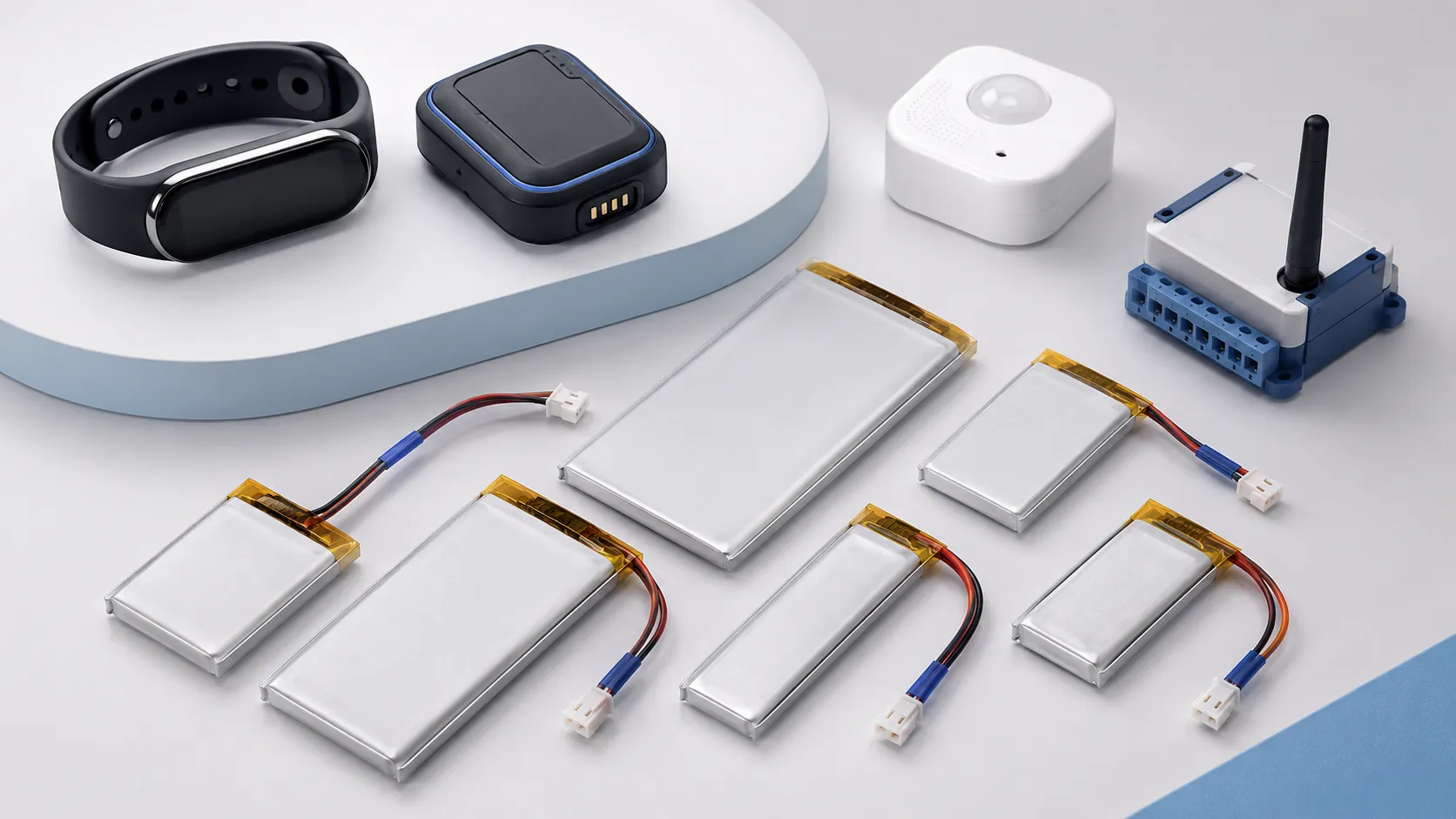
Lithium polymer batteries are now used in an enormous range of compact electronic products. Wearable devices, GPS trackers, smart sensors, portable medical equipment, robotics, RC models and small drones often depend on the thin profile, low weight and flexible dimensions of a LiPo pouch battery. These advantages make lithium polymer batteries highly useful for OEM projects, but they also make LiPo battery safety a critical design responsibility.
Questions such as “Are LiPo batteries safe?”, “Why do LiPo batteries catch fire?” and “What causes LiPo battery thermal runaway?” are reasonable. A lithium-based cell stores a meaningful amount of energy in a small space. If the cell is overcharged, short-circuited, crushed, overheated or damaged internally, its temperature can rise faster than the surrounding structure can remove heat. Under severe conditions, the cell may enter thermal runaway — a self-accelerating failure process that can release hot gas, smoke, flame and, in extreme cases, cause fire propagation to nearby materials or cells.
That does not mean LiPo batteries are inherently unsafe. It means that safety cannot be assigned to the cell alone. A reliable battery system combines an appropriate cell, correct charge limits, a protection circuit or BMS, temperature monitoring where needed, secure wiring and insulation, mechanical protection, manufacturing controls, application-specific validation and correct use in the final product.
This guide explains the main causes of LiPo battery thermal runaway, the meaning of pouch-cell swelling, the protective layers used in modern battery packs, and the international standards that OEM buyers should understand. It also explains why the safest battery solution is usually the one engineered around the device’s real load, charging method, enclosure and operating environment — not simply the cell with the highest advertised capacity.
OEM Buyer Takeaway
LiPo battery safety is not a catalog question. It is a project-architecture question. The safest option is the cell and pack design that fits the real load profile, charger behavior, enclosure, thermal environment, certification route and long-term supply plan.
For product teams, the biggest risk is often not choosing an obviously bad cell. It is approving a battery based on capacity and dimensions before current demand, charge behavior, pouch expansion allowance, documentation scope and mass-production consistency have been reviewed together. A structured custom battery project process is designed to catch these gaps early.
Quick Answer
A LiPo battery is safe when it is correctly selected, charged, protected and built — and unsafe mainly when one of those controls fails. The core hazard is thermal runaway, a self-heating chain reaction that can start from overcharge, a wrong charging voltage, physical damage, internal short circuit, poor cell quality or excessive heat. Most fire risk is reduced before assembly through cell selection, a correct charging window (typically 4.2 V per cell), PCM/BMS protection, mechanical fit and mass-production consistency — not by any single safety device.
1. Are LiPo Batteries Safe?
Yes. A properly selected, manufactured and integrated LiPo battery can operate safely within its specified voltage, current and temperature limits. Lithium polymer pouch cells are widely used precisely because they can deliver reliable rechargeable power in products where weight, thickness and shape matter.
However, all rechargeable lithium-ion cells require disciplined engineering. A safe design must consider both normal use and reasonably foreseeable misuse. The battery may experience a blocked ventilation path, an incorrect adapter, a damaged cable, a stalled motor, a software fault, a drop, vibration, prolonged storage at a high state of charge or an unusually hot environment. Each of these conditions can change the electrical or thermal stress applied to the cell.
The important question is therefore not simply whether LiPo batteries are safe. The better question is whether the complete battery-powered product has been designed so that foreseeable faults are detected, limited and contained before they escalate. This system-level view is consistent with the approach used by recognized battery safety standards, which evaluate electrical, mechanical and environmental abuse conditions rather than treating safety as a marketing claim.
Engineering Insight
LiPo battery safety is a property of the complete system. Cell quality, protection electronics, charger behavior, wiring, enclosure design, firmware and manufacturing control must work together. A premium cell cannot compensate for a charger that applies the wrong voltage, and a good protection circuit cannot repair a cell that has already been crushed or punctured.
Project selection resource: review the available pouch-cell sizes and capacities in our Custom LiPo Battery Models library before defining a custom pack.
2. What Does “LiPo Battery” Actually Mean?
In commercial electronics, the term LiPo usually refers to a rechargeable lithium-ion cell packaged in a flexible aluminum-laminate pouch. It does not automatically mean that the cell uses a completely solid polymer electrolyte. Many products sold as lithium polymer batteries use lithium-ion electrode chemistry with a liquid or gel-type non-aqueous electrolyte inside the pouch.
The pouch format provides several engineering advantages. It removes the heavy steel can used by many cylindrical cells, supports very thin dimensions, and allows the custom length and width combinations that make a custom LiPo battery possible. This is why small-capacity LiPo pouch batteries are common in compact devices. The same flexible package also means the cell needs careful mechanical support. A pouch cell should not be bent, folded, punctured, compressed by sharp enclosure features or installed without allowance for normal dimensional change.
The aluminum-laminate film acts as a lightweight sealed enclosure, but it is not a rigid protective shell. The end product must therefore provide the mechanical protection that the pouch itself cannot. The battery cavity, adhesive method, foam, brackets, cable routing and nearby fasteners should be reviewed as part of the battery design rather than after the enclosure is finalized.
3. What Is Thermal Runaway in a LiPo Battery?
Thermal runaway is an uncontrolled, self-heating condition inside a lithium-ion cell. It begins when heat generation within the cell exceeds the rate at which heat can dissipate to the surrounding environment. As temperature rises, additional exothermic reactions can begin. Those reactions release more heat, which accelerates further reactions and creates a positive feedback loop.
The process is not always instantaneous. A battery may first show abnormal warmth, voltage instability, odor, softening of the pouch, swelling or venting. In other cases, especially after a severe internal short circuit, the transition can be rapid. The exact behavior depends on cell chemistry, construction, state of charge, capacity, age, fault type and the way the battery is confined inside the product.
Peer-reviewed operando research has shown that thermal runaway develops through interacting mechanical, electrochemical and thermal changes inside commercial lithium-ion cells. Once the separator and internal interfaces are seriously compromised, disconnecting the external charger may not be enough to stop self-heating. That is why effective battery safety focuses on preventing the initiating fault and detecting abnormal conditions early.
A thermal runaway event can release hot and flammable gases. The event may remain limited to one cell, or it may ignite nearby combustible materials or heat adjacent cells. Pack layout, spacing, insulation and venting direction therefore become increasingly important as cell capacity and the number of cells increase.
4. What Causes LiPo Batteries to Catch Fire?
Short answer: LiPo batteries catch fire when abuse or a defect drives a cell into thermal runaway. The most common triggers are overcharging or an incorrect charging voltage, internal short circuits from damage or contamination, over-discharge followed by unsafe recharging, external short circuits, and excessive heat. In practice a fire usually needs more than one weakness at once — for example a stressed cell plus poor heat dissipation and delayed protection.
1. Overcharging or an Incorrect Charging Voltage
Overcharging is one of the best-known routes to lithium-ion battery failure. A standard single-cell LiPo battery is commonly charged to a chemistry-specific upper voltage defined by the cell manufacturer. Applying a higher voltage, using the wrong charger profile or allowing one cell in a series pack to exceed its limit can destabilize the electrode-electrolyte system and generate heat and gas.
The charger, protection circuit and fuel-gauge or control firmware should agree on the permitted voltage and charging current. A protection board is a backup safety layer, not a substitute for a correctly designed charger. For multi-cell packs, individual cell monitoring and balancing may be required because total pack voltage alone cannot reveal that one cell is overcharged while another remains low.
2. Internal Short Circuits
An internal short circuit creates a low-resistance path inside the cell, producing concentrated local heating. Possible contributors include metallic contamination, burrs, separator damage, manufacturing defects, dendritic growth under abusive conditions or mechanical deformation after the product is dropped or crushed.
Internal shorts are difficult because they may not be visible during a simple external inspection. This is why cell production controls, aging, open-circuit-voltage monitoring, internal-resistance checks and supplier traceability matter. No incoming inspection can prove that every latent defect is absent, but disciplined cell manufacturing and screening reduce the probability that an abnormal cell enters the finished product.
3. External Short Circuits and Excessive Current
Damaged insulation, reversed wiring, loose conductive debris, connector faults or a failed load can create an external short circuit. High current causes rapid I²R heating in the cell, tabs, wires, welds and connectors. Even when the cell remains below its maximum discharge rating, an undersized wire or poor terminal connection can become a localized heat source.
A safe pack may combine over-current protection, short-circuit protection, suitable wire gauge, insulated nickel or copper conductors, secure strain relief and, where appropriate, a fuse or resettable protection device. The current limit should be based on the real peak load and pulse duration of the device, not only its average power consumption.
4. Mechanical Damage, Puncture or Compression
The thin pouch construction is vulnerable to sharp edges, screws, impact and repeated bending. A puncture can directly connect internal layers and trigger an internal short. Compression may distort electrodes or damage the separator even when the outer pouch initially appears intact.
Product designers should examine drop paths, enclosure flex, battery movement, assembly tools and service procedures. A battery that fits the CAD cavity with zero clearance may still be unsafe if enclosure tolerances, adhesive thickness and expected cell expansion are not considered.
5. Excessive Temperature or Inadequate Heat Dissipation
A LiPo battery may be heated by the environment or by neighboring components such as processors, LEDs, motors, charging coils and power converters. Charging generally produces additional heat, so a device that is safe while idle may become too hot when charging and operating at the same time.
Thermal review should include ambient temperature, internal hot spots, enclosure material, ventilation and worst-case duty cycle. Temperature limits must come from the selected cell specification. Generic assumptions are not sufficient because allowable charge and discharge ranges vary by cell design and chemistry.
6. Charging at Low Temperature and Lithium Plating Risk
Charging a lithium-ion cell below its permitted temperature range can promote undesirable lithium deposition on the anode. Continued cycling under such conditions can increase degradation and the possibility of internal short-circuit pathways. Portable products intended for winter, high-altitude or refrigerated environments should therefore include a defined low-temperature charging policy.
The appropriate control may be as simple as disabling charge below a temperature threshold, or it may involve reducing charge current within a limited temperature band. The strategy must be validated with the actual cell and charger rather than copied from another battery model.
7. Cell Imbalance in Multi-Cell Packs
Cells connected in series do not age identically. Differences in capacity, internal resistance, self-discharge and temperature can grow over time. Without individual monitoring, a weaker cell may reach an overcharge or over-discharge limit before the total pack voltage appears abnormal.
Cell matching, balancing, multi-cell BMS design and conservative operating windows help manage this risk. Parallel groups also require careful design because unequal current sharing can increase local stress when cells, welds or connections are inconsistent.
8. Incompatible Chargers, Connectors or User Replacement
Some incidents begin outside the battery. An adapter with the wrong output, a connector that can be forced into the wrong orientation, poor USB power negotiation, or an unapproved replacement battery can defeat the assumptions built into the original product.
A robust design uses keyed connectors where possible, verifies charger behavior, prevents reverse polarity, documents approved replacement parts and considers what a user or service technician could reasonably connect. Electrical interface control is part of LiPo battery safety.
Industry Perspective
Recognized authorities consistently treat damage, overheating, overcharge, improper protection and manufacturing defects as meaningful lithium-ion battery hazards. The practical response is layered risk reduction: prevent the fault, detect it early, interrupt current safely and limit the consequences if a cell still fails.
5. Why Do LiPo Batteries Swell?
LiPo battery swelling occurs when gas accumulates inside the sealed pouch. Gas can be generated by electrolyte decomposition and other side reactions during abnormal charging, high-temperature exposure, aging or internal damage. Because the pouch is flexible, the pressure becomes visible as puffing or bulging rather than being hidden inside a rigid metal can.
Not every dimensional change has the same meaning. Pouch cells can exhibit small reversible thickness changes as electrode materials expand and contract during cycling. A visibly puffy battery, progressive swelling, a distorted enclosure, unusual odor, rapid heating or a cell that no longer sits flat should be treated as abnormal. The product should be switched off and handled according to the manufacturer or qualified battery-service procedure.
A swollen LiPo battery should not be punctured, pressed flat, bent, rewrapped and returned to service. Releasing gas by piercing the pouch creates a direct mechanical and electrical hazard and can expose reactive internal materials. A battery showing abnormal swelling should be isolated from combustible materials and routed to an appropriate battery recycling or hazardous-waste channel according to local requirements.
For OEM design, swelling is also a mechanical issue. The enclosure should not clamp the broad faces of the cell so tightly that normal expansion creates damaging pressure. At the same time, the battery must not move freely or contact sharp structures. The correct design balances retention, cushioning, heat transfer, service access and expansion allowance.
Worried about swelling or fire risk in your LiPo pack? Get a free safety review.
Talk to a Battery Engineer6. How Modern LiPo Battery Systems Reduce Fire Risks
Cell Selection Based on the Real Application
Safety begins by choosing a cell whose voltage, capacity, discharge capability, dimensions and temperature range match the device. A very high-capacity cell may not be suitable if it cannot support the required pulse current. A high-rate cell may be unnecessary in a low-power tracker if it increases cost or reduces available capacity for the same volume.
The engineering review should define nominal and maximum load current, pulse duration, charge current, standby consumption, cutoff voltage, operating temperature, available space, expected cycle life and mechanical environment. Cell selection should follow those requirements rather than starting with a catalog number and forcing the product around it.
Protection Circuit Module or Battery Management System
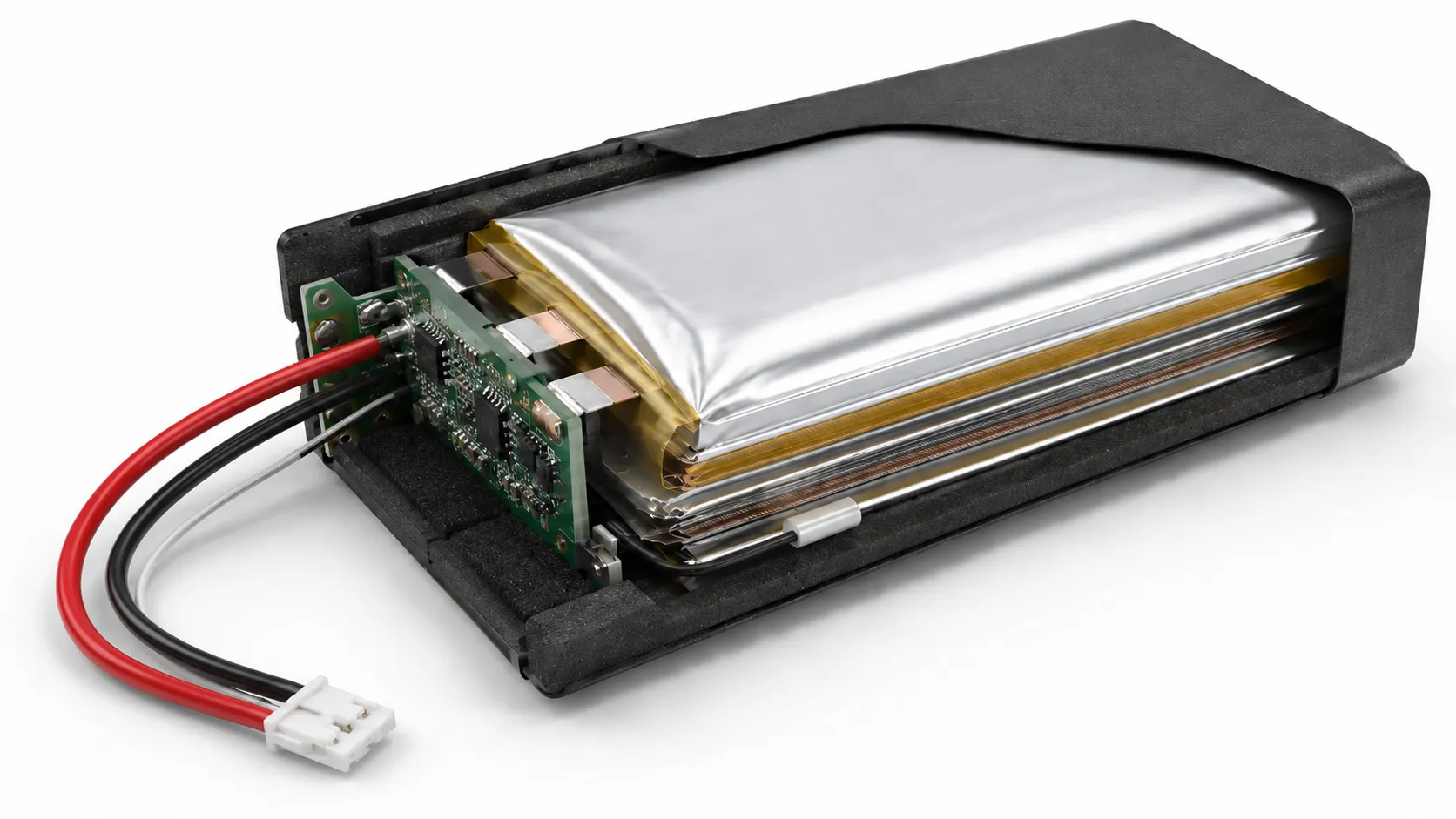
A simple single-cell LiPo pack commonly uses a protection circuit module (PCM). Depending on the design, the PCM can disconnect the cell during overcharge, over-discharge, over-current or short-circuit conditions. Multi-cell or more complex packs may require a BMS with individual cell monitoring, balancing, temperature inputs, communication and fault logging. Our connector, wire and PCM/BMS customization service covers this matching work for custom packs.
Protection thresholds, delay times and recovery behavior must suit both the cell and the product. Thresholds that are too loose may not protect the cell adequately; thresholds that are too sensitive may create nuisance shutdowns during normal load pulses. MOSFET current capability, board thermal performance and short-circuit response should be verified in the finished pack.
Temperature Monitoring and Charge Inhibition
An NTC thermistor can provide the charger or main controller with direct battery-temperature information. This allows the system to pause or reduce charging outside the approved temperature range and can help identify abnormal heating during operation.
Sensor placement matters. A thermistor mounted far from the cell or isolated by thick foam may respond too slowly. In multi-cell packs, one sensor may not represent the hottest cell. The correct number and position of sensors depend on pack size, heat sources, enclosure layout and risk assessment.
Correct Charger and Power-Path Design
The charging IC should implement the voltage and current profile specified for the selected cell. Designers should also consider input-voltage faults, charger thermal regulation, timer behavior, power-path operation and whether the product can draw heavy current while charging.
Charging and protection are complementary. The charger controls normal energy delivery; the PCM or BMS provides independent fault protection. Relying on only one layer creates a single point of failure.
Mechanical Protection, Insulation and Strain Relief
Pouch cells require a smooth battery cavity without sharp ribs, exposed screw tips or conductive edges. Insulating films, foam, frames and adhesives may be used to control movement and prevent abrasion. Tab areas should be protected from bending, and wires should have strain relief so repeated cable movement is not transferred directly to the cell seal or solder joint.
Adhesives must also be chosen carefully. A cell bonded too aggressively may be damaged during service removal, while a weak adhesive may allow impact movement. The assembly process should define application area, curing conditions, compression and removal method.
Fuses, Current-Limiting Devices and Safe Conductors
For some applications, a fuse or current-limiting element provides an additional independent response to severe over-current. Wire gauge, conductor material, tab width, weld pattern and connector rating should support the maximum continuous and peak current without excessive temperature rise.
Every connection adds resistance. Poor soldering, contaminated weld surfaces or loose terminals can create localized heat even when the cell itself is healthy. Electrical interconnect design is therefore part of thermal management.
Thermal Spacing and Failure Containment
In a single-cell wearable device, thermal design may focus on separating the battery from skin, processors and charging components. In a multi-cell pack, it may also need to reduce cell-to-cell heat transfer and direct vented gas away from users or ignition sources.
Fire-resistant barriers, spacing, vent paths or compartmentalization may be appropriate for selected products, but they should be based on testing and risk assessment. Adding an insulating layer without understanding heat flow can sometimes trap normal operating heat. The complete thermal design must consider both everyday cooling and abnormal failure behavior.
Firmware, Diagnostics and System Interlocks
Smart products can add another protective layer through firmware. The controller may compare current, voltage, state of charge and temperature trends, reduce performance under extreme conditions, lock out charging after a serious fault or record diagnostic data for service analysis.
Software should not be the only safety mechanism. Sensors can fail, data can be corrupted and firmware can contain errors. Critical fault protection should remain effective when communication with the host device is lost.
7. How to Define a Safer Custom LiPo Battery Specification
A safer LiPo battery project starts with a complete specification, not only a target capacity. The following items help engineering, sourcing and compliance teams reduce selection risk before samples are built.
1. Define the real load profile
Record standby current, average working current, peak current, pulse duration, motor-start or radio-transmission events, sleep behavior and cutoff requirements. A battery selected only by mAh may pass a runtime estimate but fail under peak load.
2. Confirm charge method and power-path behavior
Specify the charger IC, charge voltage, charge current, adapter input, USB negotiation if used, timer behavior and whether the device can operate while charging. Charging and operation at the same time can create a worse thermal case than either mode alone.
3. Review enclosure fit before locking the ID design
Pouch cells need smooth support, controlled compression, protected tabs, cable strain relief and allowance for normal dimensional change. A battery that fits the nominal CAD cavity may still be unsafe if tolerances, foam, adhesive thickness and possible swelling are ignored.
4. Select protection based on the fault cases
A low-power single-cell device may need a PCM and NTC input. A multi-cell pack may require cell balancing, individual cell monitoring, communication, fusing or fault logging. The protection architecture should follow the risk profile of the product, not a generic pack template.
5. Validate with the real device
Sample testing should use the actual charger, load, enclosure, cable routing, firmware and expected operating modes. Bench testing a loose battery pack is useful, but it does not prove that the battery is safe inside the final product.
Engineering Insight
The safest architecture does not ask one component to solve every problem. The charger manages normal charging, the PCM or BMS interrupts electrical faults, the enclosure prevents mechanical abuse, temperature monitoring limits operation outside the approved range, and manufacturing tests confirm that the assembled pack behaves as designed.
8. Battery Cell Quality and Manufacturing Control
Battery safety cannot be separated from manufacturing quality. Cell coating uniformity, separator placement, electrolyte filling, sealing, formation, aging and grading all affect long-term behavior. At pack level, tab welding, soldering, insulation, wire routing, connector polarity and protection-board assembly introduce additional variables. You can review how these steps are controlled in our production process.
Incoming cell checks commonly include appearance, dimensions, open-circuit voltage, internal resistance and batch identification. Capacity and load testing may be performed according to the project and sampling plan. Cells intended for one series or parallel group should be matched using criteria appropriate to the pack architecture.
After assembly, the pack should be checked for polarity, output voltage, protection functions, charge and discharge behavior, insulation, connector engagement and workmanship. Projects with higher current, unusual temperature exposure or safety-critical use may require additional temperature-rise, vibration, drop, crush, cycle-life or application-specific validation.
Aging and traceability are especially important. A pack that passes an immediate voltage check may still contain an abnormal self-discharge path or intermittent connection. Defined aging time, retesting and production records help detect problems before shipment and support root-cause analysis if a field issue occurs.
9. Which Safety Standards Apply to LiPo Batteries?
No single document covers every LiPo battery, pack, end product and destination market. The applicable requirements depend on whether the item is a cell, battery pack or finished device; whether it is portable, medical, industrial or transport-related; and where it will be sold. The standards below are common references, but the final compliance plan should be confirmed for the actual product and market.
It is also important to distinguish safety testing from supporting documentation. An SDS or MSDS communicates chemical and handling information; it is not a product safety certification. RoHS and REACH address restricted substances and chemical obligations; they do not replace electrical, mechanical or transport safety testing. CE marking is a conformity framework for applicable European legislation, not a standalone battery-fire certificate. Examples of the documentation THOR Power maintains can be found on our certificates page.
Compliance Note
A document name is useful only when the report scope matches the exact cell or pack model, configuration and manufacturer. Buyers should verify model numbers and report coverage before using documentation for shipment, customer approval or market entry.
| Standard / Requirement | Typical Scope | Why It Matters |
|---|---|---|
| IEC 62133-2:2017+A1:2021 | Portable sealed secondary lithium cells and batteries | Safe operation under intended use and reasonably foreseeable misuse. Often relevant to portable products. |
| UL 1642 | Lithium cells | Cell-level safety evaluation used for lithium cells, especially portable applications. |
| UL 2054 | Household and commercial battery packs | Pack-level requirements for batteries used in household and commercial products. |
| UN Manual of Tests and Criteria, 38.3 | Transport of lithium cells and batteries | Required type testing for lithium cells and batteries offered for transport under applicable dangerous-goods rules. |
| End-product standards | The complete powered device | May add charger, enclosure, abnormal-operation, fire and user-protection requirements beyond battery certification. |
IEC 62133-2 specifies requirements and tests for the safe operation of portable sealed secondary lithium cells and batteries under intended use and reasonably foreseeable misuse. UL Solutions identifies UL 1642 for lithium cells and UL 2054 for household and commercial battery packs among common battery safety standards.
UN 38.3 serves a different purpose. It is a transport test requirement under the United Nations Manual of Tests and Criteria. The test sequence addresses conditions such as altitude simulation, thermal cycling, vibration, shock, external short circuit, impact or crush, overcharge and forced discharge as applicable. Passing UN 38.3 does not mean that the battery automatically satisfies every product-market safety requirement; it means the tested cell or battery type has met the applicable transport test sequence.
OEM buyers should request documents that match the exact cell or pack model being purchased. A report for a similar battery, a different capacity or an unprotected cell may not cover the final custom assembly. The model number, configuration, manufacturer and test-report scope should be checked before the document is used for compliance or shipping.
10. Common LiPo Battery Mistakes That Delay OEM Projects
Many battery problems appear late because the battery is treated as a replaceable component instead of part of the product architecture. The issues below are common causes of redesign, failed samples, delayed certification or unstable mass production.
Choosing capacity before checking current
A higher-capacity pouch cell is not automatically safer or better. If its discharge capability is too low, the device may reset, heat up or trigger protection under peak load.
Finalizing the enclosure before confirming pouch behavior
Thin batteries are attractive for compact products, but tabs, seals, wire exits, adhesive area, compression and expansion allowance must be designed early. Late cavity changes are expensive and can affect tooling.
Using total pack voltage as the only multi-cell safety check
In a series pack, total voltage can look acceptable while one cell is already outside its safe range. Multi-cell designs need cell-level review, matching and balancing strategy where appropriate.
Treating UN 38.3 as final product certification
UN 38.3 supports transport of the tested cell or battery type. It does not replace end-product safety, charger, EMC, medical, fire or market-specific requirements.
Approving samples without locking the controlled parts
After sample approval, the cell model, protection board, connector, wire length, insulation method and key process parameters should not change without customer confirmation. Otherwise the validated product and the mass-production product may not be the same.
Ignoring storage and shipping conditions
Long storage time, high state of charge, hot warehouses, incorrect packaging and damaged cartons can all affect risk. Storage state, aging checks and shipping documentation should be part of the project plan.
11. How OEM Buyers Can Evaluate a LiPo Battery Supplier
- Does the supplier review voltage, capacity, peak current, continuous current, charging method, connector, temperature range, available space and enclosure constraints before recommending a cell?
- Can the supplier explain whether the project needs a basic PCM, a multi-cell BMS, an NTC sensor, a fuse, communication or additional host-system controls?
- Are cell batch, production lot and key test results traceable?
- Are incoming inspection, cell matching, welding, insulation, protection-function testing and aging included in the quality plan?
- Do certificates and UN 38.3 test summaries correspond to the exact cell or battery model?
- Can the supplier support samples and application testing before mass production?
- Will the supplier review mechanical integration, rather than only quoting a battery that fits the nominal dimensions?
- Can the supplier maintain the approved cell, protection board, connector and process after the sample is confirmed?
The answers reveal whether the supplier is acting as a catalog seller or an engineering partner. Price remains important, but the lowest initial battery cost may be outweighed by enclosure redesign, failed certification, field returns, shipping delays or safety incidents if the project requirements were not reviewed correctly.
For early model comparison, THOR Power’s LiPo battery model library provides a practical starting point. The final selection should still be confirmed against the device’s electrical, mechanical and regulatory requirements.
12. What to Send Your Battery Supplier Before Sample Development
A strong battery supplier can help refine the specification, but the first quotation will be more accurate when the project team provides practical engineering context.
- Device type, target market and expected certification or transport requirements.
- Available battery space, maximum thickness, tab direction, wire exit direction and enclosure drawings if available.
- Target voltage, capacity, runtime goal, standby current, continuous current, peak current and pulse duration.
- Charging method, charge current, adapter or USB input, power-path behavior and whether the product operates while charging.
- Operating and storage temperature range, expected vibration, drop, compression or outdoor exposure.
- Connector type, wire length, polarity, NTC requirement, PCM/BMS requirement, labeling, packaging and quantity plan.
- Sample test plan, approval criteria and the parts that must remain locked for mass production.
This information allows the supplier to recommend a battery that is technically compatible with the device instead of quoting the nearest catalog cell by size.
13. How THOR Power Supports Safer Custom LiPo Battery Projects

THOR Power supports OEM and ODM customers developing compact rechargeable products that require custom LiPo pouch batteries. The engineering review begins with the application rather than a generic capacity request. Battery type, voltage, capacity, load current, dimensions, connector, wire length, PCM or BMS, temperature monitoring and production feasibility are reviewed before the solution is finalized.
Our project review follows a practical path: requirement review, cell matching, PCM or BMS selection, connector and wire confirmation, sample build, application testing, documentation review and mass-production control. This process is designed to reduce the gap between a working sample and a stable long-term supply item.
For approved projects, THOR Power can help define which elements should be controlled in the final specification, including cell model, protection IC or board design, NTC value and location, connector, wire gauge, insulation, label, packaging and quality checks. Controlled changes are important because a small component substitution can affect current capability, temperature rise, fit, transport documentation or certification scope.
Depending on the project, support can include cell-size selection, custom wire and connector configuration, protection-circuit matching, NTC integration, insulation and pack-structure recommendations, prototype samples and verification before mass production. The appropriate design depends on the device; not every project requires the same electronics or the same safety features.
Manufacturing controls focus on key steps such as cell verification, tab and wire connection, insulation, polarity control, protection-function testing, capacity checks and final appearance. Long-term supply consistency is considered because changing a cell, connector or protection component after product validation may affect electrical performance, mechanical fit or compliance documentation.
THOR Power does not treat certification names as substitutes for engineering. A UN 38.3 report supports transport compliance for the covered model, while IEC, UL and end-product requirements address different scopes. The goal is to help customers define which tests and documents are actually relevant to the intended product and market.
The most reliable project outcome comes from confirming the battery and host device together. Sample testing should include the real charger, real load, enclosure, cables, operating modes and expected environmental conditions. This reduces the risk of discovering current, temperature or fit problems after tooling or mass production has begun.
14. When to Involve THOR Power in Your Project
The best time to involve a battery supplier is before the enclosure, charger and connector are fully locked. Early review helps balance runtime, thickness, discharge capability, charging safety, certification planning and production consistency while design changes are still manageable.
If your project already has a prototype, send the real load profile, battery space, charger details, connector request and target market. THOR Power can review whether the current battery direction is suitable or whether a safer, more stable custom LiPo battery solution should be considered. You can request a battery solution and receive a recommended LiPo battery direction before sample development.
Planning a Custom LiPo Battery Pack?
Send us your device space, thickness limit, discharge rate, connector and charging method. Our engineers will recommend the right pouch cell, PCM protection and wiring — with samples, UN38.3/MSDS support, and stable mass production.
Talk to a Battery EngineerKey Takeaways
- LiPo batteries are safe when the cell, charger, protection electronics, enclosure and operating limits are engineered as one system.
- Thermal runaway is a self-accelerating internal heating process. Prevention is more effective than relying on fire suppression after the process begins.
- Overcharge, short circuits, mechanical damage, excessive temperature, low-temperature charging and cell imbalance are important risk factors.
- Visible progressive swelling is an abnormal warning sign. A swollen pouch battery should not be punctured, flattened or returned to service.
- Single-cell packs often use a PCM; multi-cell or feature-rich packs may require a BMS with individual cell monitoring, balancing and temperature inputs.
- IEC 62133-2, UL 1642, UL 2054 and UN 38.3 address different scopes. A report or certificate should match the exact model and intended market.
- SDS/MSDS, RoHS, REACH and CE documentation do not replace battery safety and transport testing.
- OEM buyers should validate samples in the real product with the actual charger, load, enclosure and operating environment.
Conclusion
LiPo battery safety is not achieved by one label, one protection IC or one test report. It is built through a sequence of correct decisions: choosing a cell that matches the application, charging it within its specified limits, protecting it from electrical and mechanical abuse, monitoring temperature where necessary, controlling the manufacturing process and validating the final battery inside the real product.
Thermal runaway is a serious lithium-ion failure mode, but it is not an inevitable feature of daily LiPo battery use. Modern cell manufacturing, protection electronics, charger control, mechanical design and recognized safety testing provide multiple opportunities to prevent a fault or stop it from escalating.
For OEM and ODM projects, the best time to review battery safety is before the enclosure, charger and connector are locked. Early engineering review makes it easier to balance capacity, runtime, current capability, dimensions, compliance and long-term supply without creating late-stage redesign risks.
A custom LiPo battery should therefore be selected as part of the product architecture, not as a replaceable commodity at the end of development. When battery and device are engineered together, compact pouch-cell technology can provide both the form-factor flexibility and the dependable performance modern electronics require. Browse our standard LiPo battery models to anchor your specification, or start a custom review.
FAQ: LiPo Battery Safety
Are LiPo batteries safe for consumer and industrial electronics?
Yes, when they are properly selected, manufactured, protected, charged and installed. The complete product must keep voltage, current and temperature within the cell specification and protect the pouch from mechanical damage.
What causes LiPo battery thermal runaway?
Thermal runaway can be initiated by overcharge, internal or external short circuits, excessive heat, puncture, crushing, manufacturing defects, severe over-discharge followed by recharge, low-temperature charging abuse or other conditions that create uncontrolled internal heating.
Why do LiPo batteries catch fire?
A LiPo battery may catch fire when abnormal heat triggers self-accelerating reactions and flammable gases are released and ignited. Fire is generally the consequence of a serious electrical, thermal, mechanical or internal cell fault rather than normal operation.
Is a swollen LiPo battery dangerous?
Progressive or visible swelling is an abnormal condition and may indicate gas generation, aging, overcharge, heat exposure or internal damage. Stop using the product and follow the manufacturer or qualified service procedure. Do not puncture or compress the battery.
Can a swollen LiPo battery be repaired?
No. A swollen pouch cell should not be opened, flattened, rewrapped or returned to service. The safe action is replacement and appropriate recycling or disposal under local rules.
Does a LiPo battery need a BMS?
A basic single-cell pack often uses a PCM rather than a full communication BMS. Multi-cell packs or products requiring balancing, detailed monitoring, temperature inputs or communication may need a more capable BMS. The design depends on the application.
Can a protection circuit prevent every battery fire?
No. A protection circuit can interrupt several electrical faults, but it cannot reverse severe mechanical damage, guarantee the absence of internal defects or compensate for every charger and enclosure problem. It is one layer in a complete safety architecture.
What is the difference between IEC 62133-2 and UN 38.3?
IEC 62133-2 addresses the safe operation of portable sealed secondary lithium cells and batteries under intended use and reasonably foreseeable misuse. UN 38.3 is a transport test requirement for lithium cells and batteries offered for shipment. They serve different purposes.
Does UN 38.3 mean a LiPo battery is certified for the final product?
No. UN 38.3 supports transport compliance for the covered cell or battery type. The final device may need additional battery, charger, electrical, EMC, fire, medical or end-product evaluation depending on its market and application.
How should LiPo batteries be stored?
Follow the cell or product manufacturer’s instructions. In general, batteries should be stored in a cool, dry location away from heat, direct sunlight, conductive objects and physical damage. Long-term storage practices and state of charge should be defined for the specific product.
How can an OEM reduce LiPo battery fire risk?
Define the real load and charging conditions, select an appropriate cell, use correct protection and temperature controls, protect the pouch mechanically, validate the charger and enclosure, test samples in the real device and maintain production traceability.
How do I choose a custom LiPo battery manufacturer?
Look for application review, model-specific documentation, cell and component traceability, protection-circuit capability, sample testing, quality controls, stable long-term supply and a clear understanding of the standards relevant to your destination market.
References
- UL Solutions. Battery Certification Services for Cell Manufacturers.
- UL Solutions. Battery Safety Testing and Certification.
- International Electrotechnical Commission. IEC 62133-2:2017+A1:2021, safety requirements for portable sealed secondary lithium cells and batteries.
- United Nations Economic Commission for Europe. Manual of Tests and Criteria, Revision 8 — Part III, Sub-section 38.3.
- Federal Aviation Administration. PackSafe — Lithium Batteries.
- U.S. Consumer Product Safety Commission. Overview of Battery Safety Requirements.
- Mei et al., Nature Communications (2023). Operando monitoring of thermal runaway in commercial lithium-ion cells via advanced lab X-ray imaging.
- Finegan et al., OSTI (2017). Microstructural Analysis of the Effects of Thermal Runaway on Li-Ion and Na-Ion Battery Electrode Materials.
- UL. Safeguarding lithium-ion battery cell separators (white paper).

Dr. Maximilian Weber is THOR Power's Chief Scientist and a senior expert in lithium battery technology. His technical review focuses on battery safety, performance optimization, energy density and custom battery solution development.
Last technical review: July 2026

Victor Xiong holds a Master's degree from The Chinese University of Hong Kong, Shenzhen. He leads THOR Power's OEM Division and focuses on custom battery solutions for global device brands, product developers and industrial customers.