Description

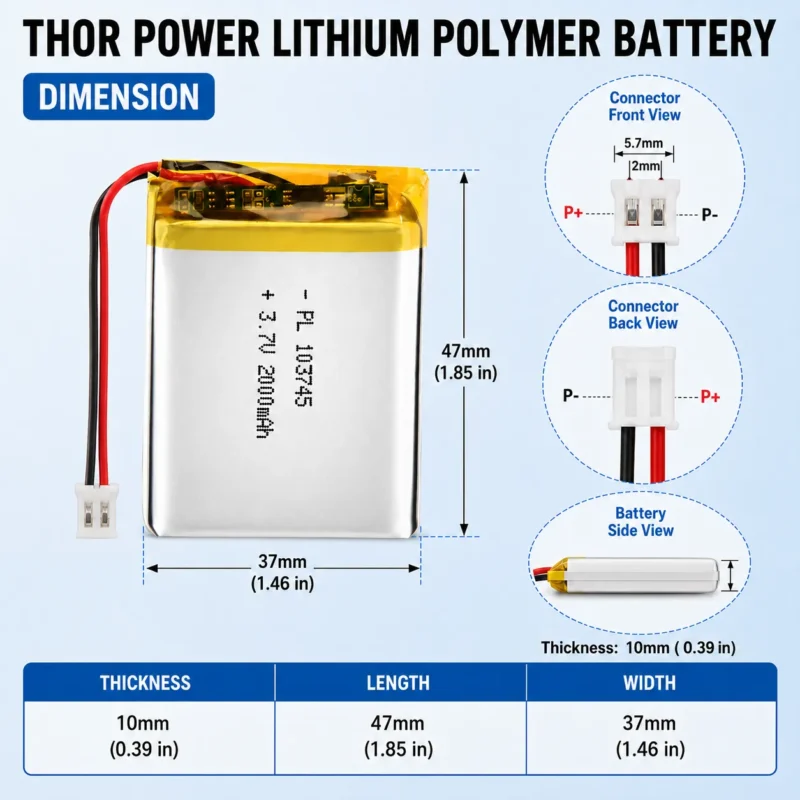
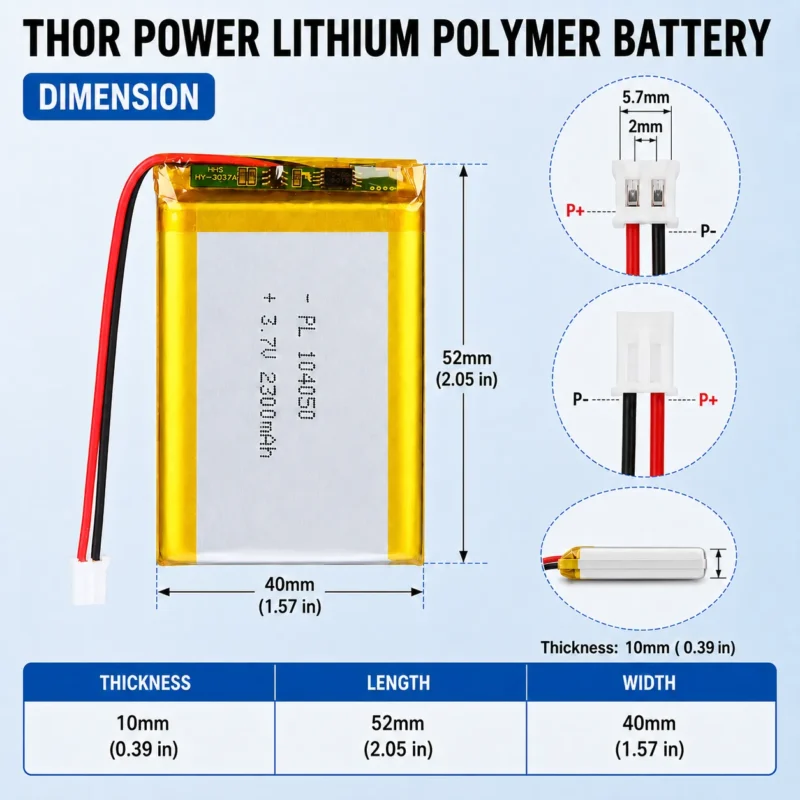
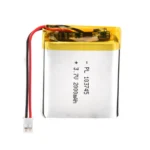
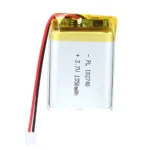
Choose THOR-103750 when a 10 × 37 × 50mm bare-cell envelope fits the product and the design needs 2000mAh nominal capacity. THOR-103745 offers the same listed capacity in a shorter 10 × 37 × 45mm format, while THOR-103450 uses a narrower 10 × 34 × 50mm footprint. If a wider 40 × 50mm cavity is available, THOR-104050 is listed at 2500mAh. Compare finished-pack drawings and approved cell data before choosing between these alternatives.

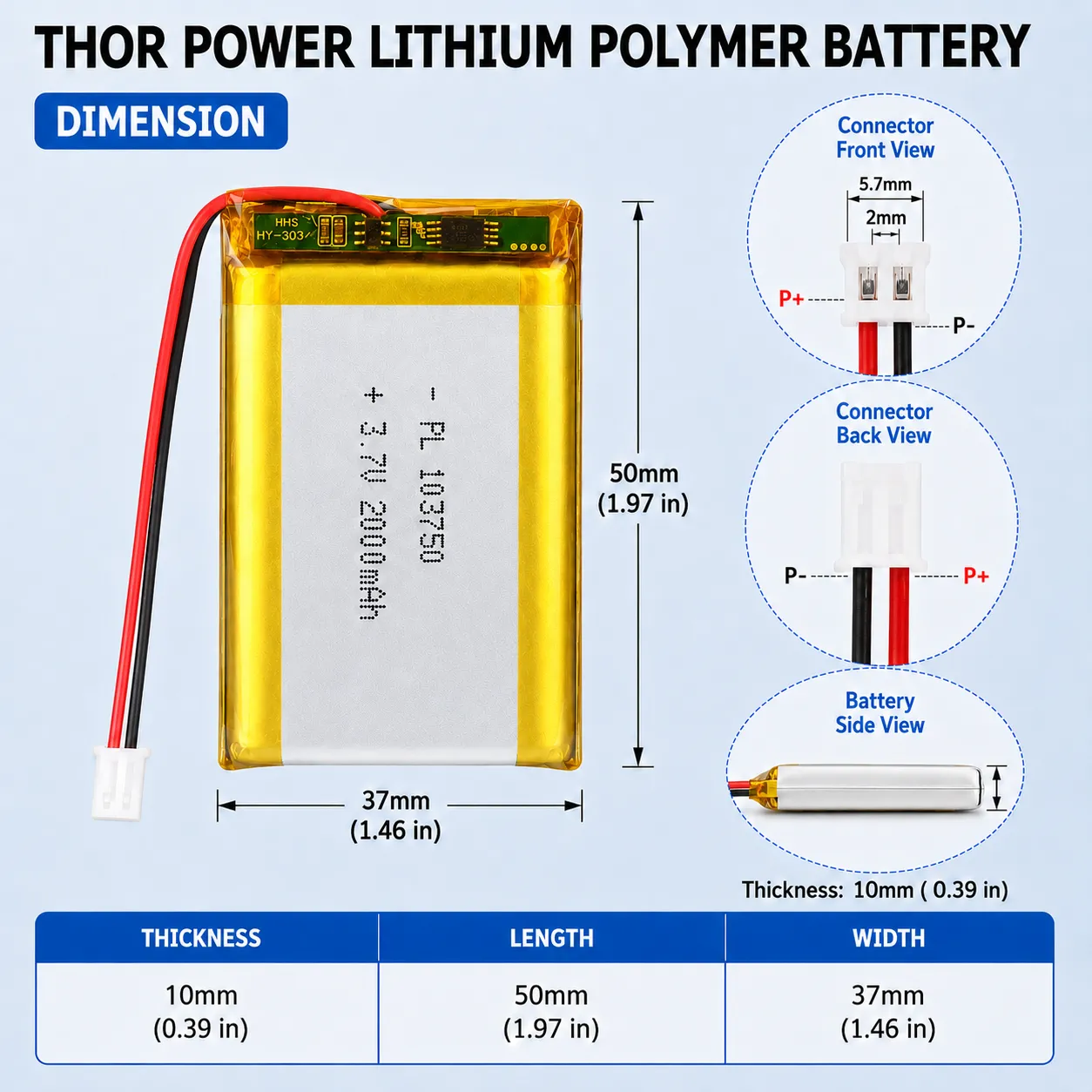
The 10 × 37 × 50mm dimensions describe the bare pouch cell. The existing PCM-equipped drawing indicates approximately 10 × 37 × 52mm, and the connector, insulation, wire exit and bend radius can increase the space needed in the enclosure. Check pinout and polarity against the host device, then confirm mechanical tolerance and normal pouch-cell expansion before tooling or harness release.

At 3.7V nominal, 2000mAh corresponds to 7.4Wh. The runtime of a handheld tester or portable instrument depends on the actual duty cycle, display and sensor consumption, wireless or actuator peaks, regulator efficiency, cutoff voltage, temperature and cell aging. Verify continuous and peak current against the approved cell, PCM, wires and connector; then confirm charging behavior and optional NTC requirements with the finished sample.

THOR-103750 Engineering & Fit Questions

What are the bare-cell and finished dimensions of THOR-103750?
The nominal bare-cell envelope is 10 × 37 × 50mm. The current PCM-equipped drawing shows approximately 10 × 37 × 52mm. Final clearance must also cover insulation, connector, wire exit, bend radius, manufacturing tolerance and normal pouch-cell expansion.
How does THOR-103750 compare with other 2000mAh geometries?
THOR-103745↗ keeps the 10 × 37mm cross-section but shortens the nominal cell length to 45mm, while THOR-103450↗ uses a narrower 34 × 50mm footprint. All three are listed at 2000mAh, so selection is primarily a cavity-geometry decision.
What higher-capacity alternative is available for a wider cavity?
THOR-104050↗ uses a 10 × 40 × 50mm nominal cell format and is listed at 2500mAh. It is the relevant comparison when the enclosure can accept 3mm more width and the project requires additional nominal energy.
Does the 7.4Wh rating guarantee runtime or peak-current performance?
No. 7.4Wh is nominal energy calculated from 3.7V and 2000mAh. Runtime depends on the measured duty cycle, regulator efficiency, cutoff voltage, temperature and aging. Continuous current, pulse current and voltage sag must be confirmed against released cell, PCM, wire and connector data.
  • Stable 3.7 V nominal output for reliable power delivery
  • Long cycle life — typically several hundred cycles, cost-efficient
  • Built-in protection: overcharge, over-discharge, short-circuit
  • Custom size, capacity, connector & PCM/BMS
  • UN38.3 / MSDS ready; CE, KC, ROHS on request

Why Choose THOR Power

A vertically integrated lithium battery manufacturer (Dengzhou Xinju New Energy) with the scale and engineering depth to deliver custom LiPo cells reliably at volume.

3 factories, 800+ staff
Source-manufacturer scale — not a trading company.
200+ engineers
R&D led by a chief battery scientist for rapid custom design.
60,000 pouch cells / day
High-volume manufacturing with products exported across the US, Europe, Japan & Korea, SE Asia, Latin America and Africa.
End-to-end quality control
From raw material to finished cell.

Factory Photos

Automation Equipment

THOR Power factory — Automation Equipment

Testing Equipment

THOR Power factory — Testing Equipment

Warehouse & Certifications
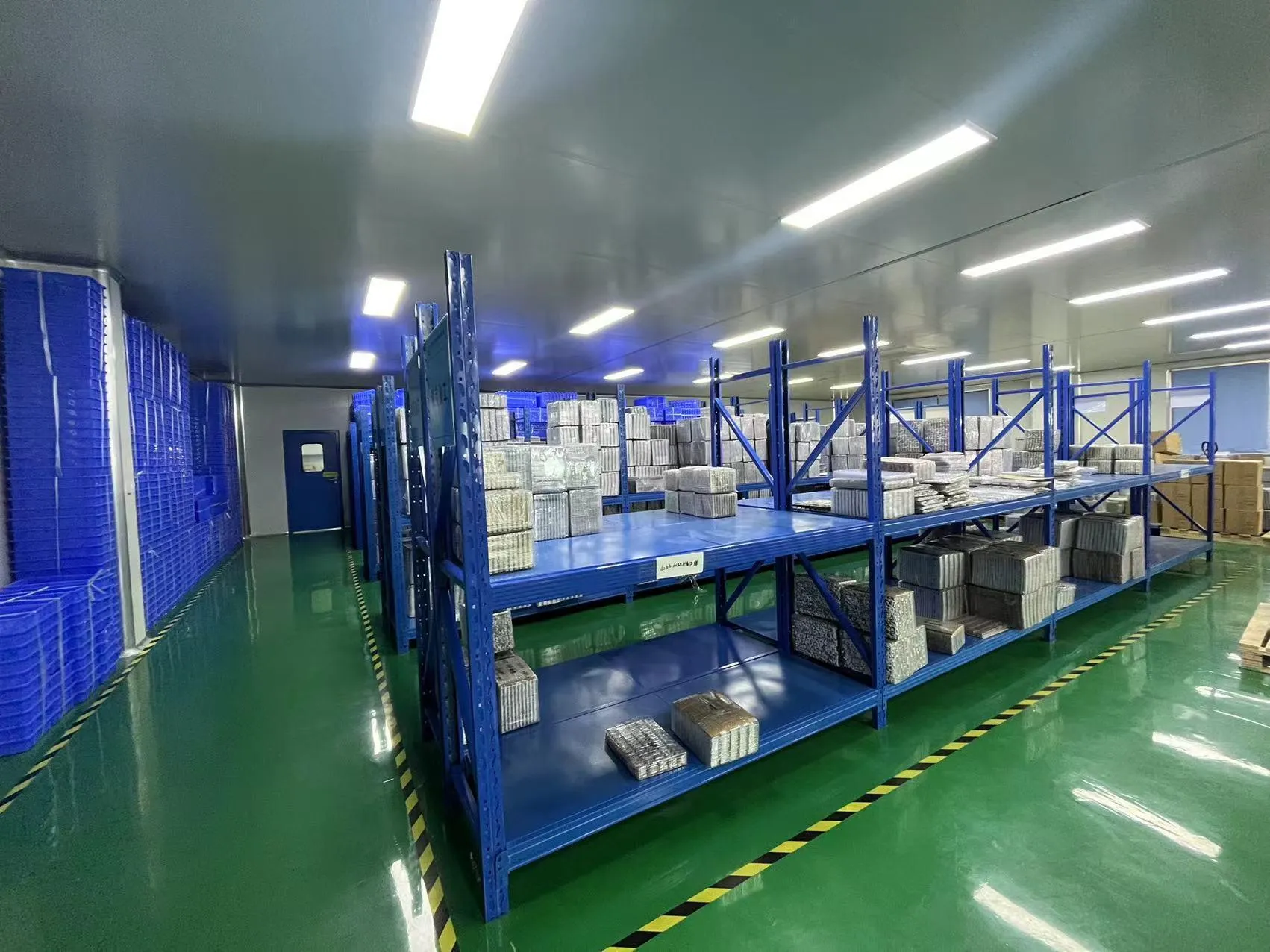
THOR Power factory — Warehouse & Certifications
ModelTHOR-103750
Battery TypeLithium Polymer (LiPo) pouch cell
Capacity2000 mAh
CertificationsUN38.3 / MSDS (IEC 62133-2, CE, KC on request)
MOQFrom 10 pcs for samples; production quoted per project
CustomizationSize, capacity, connector, wire length, PCM/BMS, NTC, label

THOR-103750 3.7V 2000mAh LiPo Battery – 10×37×50mm

THOR-103750 is a 1S 3.7V 2000mAh lithium polymer (LiPo) battery built around a nominal 10 × 37 × 50mm bare pouch cell (7.4Wh). The current PCM-equipped drawing shows approximately 10 × 37 × 52mm; confirm the finished assembly envelope before tooling. It can be evaluated for handheld field testers and portable instruments when the cavity, load current and runtime are verified. PCM, connector, polarity, wire length and optional NTC can be configured for OEM integration.

Wholesale Pricing (USD)

Order QuantityReference Unit Price
10 – 99 pcs$4.80 / pc
100 – 999 pcs$4.20 / pc
1,000 – 9,999 pcs$3.80 / pc
10,000+ pcsContact for best price

Reference pricing is shown above. Talk to a Battery Engineer for a project-specific quotation.

Reference unit pricing shown above is for standard configuration only. Final pricing may vary by cell configuration, connector, wire length, PCM/BMS, labeling, packaging, certification requirements and order quantity. Shipping cost is not included. MOQ: from 10 pcs for samples; production quantities are quoted per project.

Get an Engineering Quote

Custom sizes, capacities, connectors & PCM/BMS available. MOQ-friendly. Samples in days.

    Battery Specification — THOR-103750

    Mechanical Characteristics

    ModelTHOR-103750
    Cell TypeLithium Polymer (LiPo) pouch cell
    Configuration1S1P (customizable)
    Dimensions (T×W×L)10 × 37 × 50 mm (bare cell)
    Dimension ToleranceThickness ±0.2 mm; Width/Length ±0.5 mm
    With PCM BoardLength approx. +2 mm vs bare cell
    WeightApprox. 39 g
    PCM / BMSIncluded (standard)
    NTC ThermistorOptional
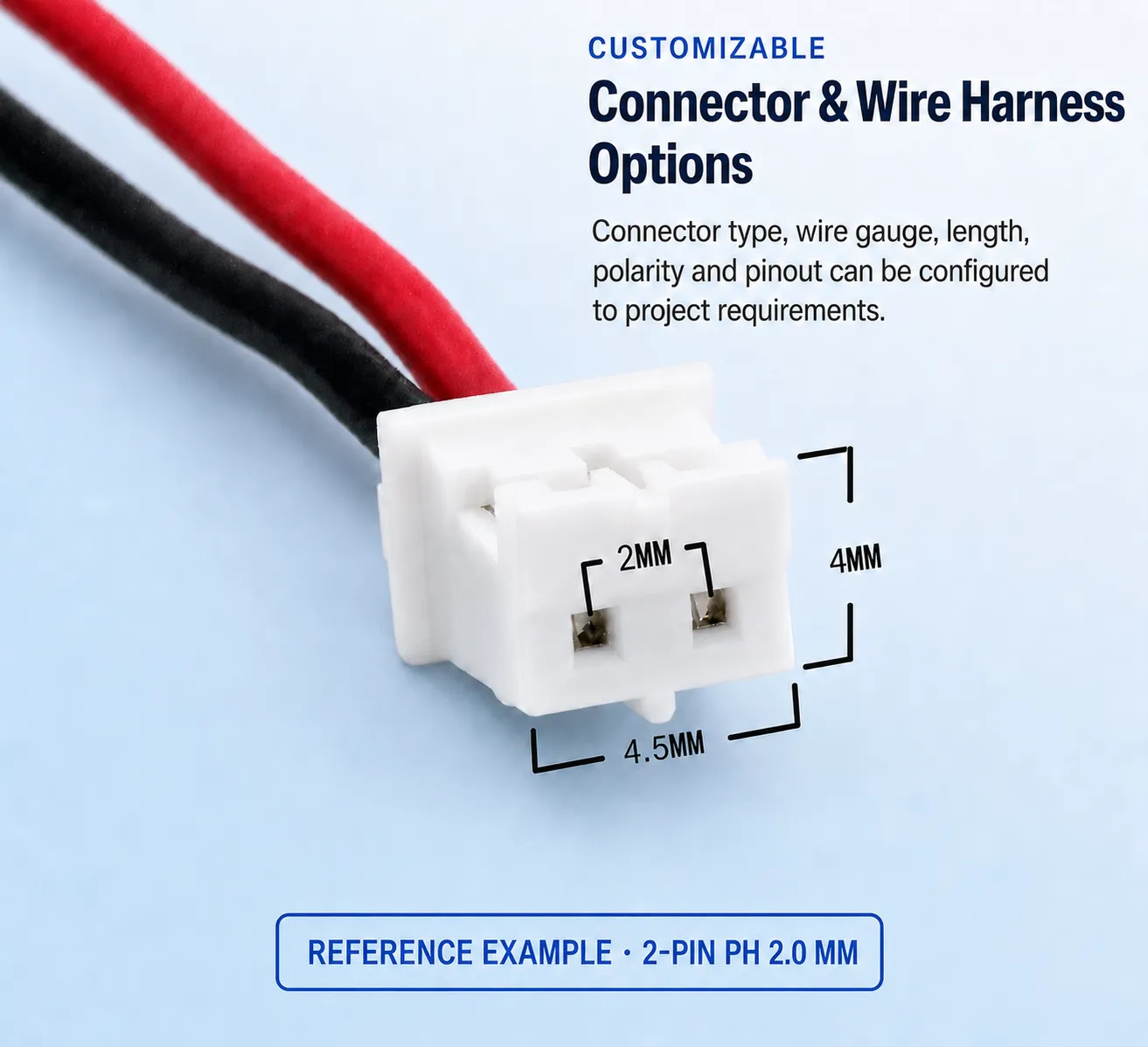
    ConnectorPH2.0 / Molex 1.25 (custom available)
    Wire LengthCustomizable
    UN38.3Test Summary available
    Safety Data SheetSDS / MSDS available
    IEC 62133-2Available for selected models
    RoHS / REACHCompliance documents available
    Electrical Specifications
    Nominal Voltage3.7 V
    Rated Capacity2000 mAh
    Energy7.4 Wh
    Charge Voltage4.20 ± 0.03 V
    Standard Charge400 mA (0.2C), CC/CV to 4.20 V
    Charge Cut-off Current0.02C
    Max. Charge Current2.0 A (up to 1C), model-specific
    Discharge Cut-off Voltage3.0 V
    Standard Discharge400 mA (0.2C)
    Max. Continuous Discharge2.0 A (1C), model-specific
    Internal Resistance≤ 45 mΩ (1 kHz, 50% SOC, 25℃)
    Cycle Life≥ 500 cycles, ≥ 80% capacity
    Cycle Test Condition0.5C charge / 0.5C discharge, 3.0-4.2 V, 25 ± 2℃
    Charge Temperature0℃ ~ 45℃
    Discharge Temperature-20℃ ~ 60℃
    Storage Temperature-10℃ ~ 45℃ (≤ 1 month)
    Capacity Retention≥ 90% after 28 days @ 25℃
    NoteHigher discharge-rate designs available upon engineering review
    Protection Circuit (when PCM equipped)
    Overcharge Detection4.28 ± 0.03 V per cell
    Overcharge Release4.08 ± 0.05 V
    Over-discharge Detection2.75 ± 0.05 V
    Over-discharge Release3.00 ± 0.05 V
    Overcurrent ProtectionPer PCM design (2A ~ 5A typical)
    Short-circuit ProtectionYes, auto-recovery

    Values shown are THOR Power standard specifications for this cell class. Final parameters are confirmed in the engineering datasheet for your configuration.

    Typical Applications — THOR-103750

    Handheld Field Testers — PrimaryThe 2000mAh rating and 37 × 50mm footprint make this cell a candidate for rechargeable field test equipment where a 10mm nominal cell depth is available. Check display, sensor and communication loads, peak current and target runtime.
    Portable Diagnostic InstrumentsSuitable for compact diagnostic electronics that can accommodate the finished 103750 assembly. Verify enclosure clearance, charging method, connector polarity, operating temperature and the instrument’s measured duty cycle.
    Wireless Data LoggersThe 7.4Wh nominal energy can support evaluation in portable data-logging devices with intermittent sensing and transmission. Validate standby draw, transmission peaks, PCM current limit and service interval in the final device.
    Compact Handheld TerminalsA candidate for rechargeable handheld terminals with space for the 10 × 37 × 50mm bare cell plus PCM and harness. Confirm display and radio peaks, voltage sag, lead-wire routing and the required operating time before approval.

    Recently viewed