LiFePO4 Energy Storage Solutions

Custom LiFePO4 Battery Packs for Energy Storage & Backup Power

THOR Power designs and manufactures custom LiFePO4 (LFP) battery packs for energy storage, UPS, backup power and portable power systems, with configurable voltage, capacity, BMS, housing and interfaces.

12V / 24V / 48V Systems Custom Capacity Options Smart BMS Protection Housing & Interface Design
Custom LiFePO4 battery pack for backup power UPS energy storage and portable power station applications with BMS and technical blueprint design
Backup Power
UPS Support
Home Energy Storage
Portable Power

SYSTEM FIT & APPLICATIONS

LiFePO4 Battery Packs Engineered Around Your Power System

A reliable battery pack must be designed around system voltage, load current, required runtime, charging method, BMS protection, installation space and external interfaces—not selected by capacity alone.

Engineered for Stable Backup Power and Long-Term Use

LFP chemistry offers strong thermal stability and long cycle-life potential, but reliable operation still depends on correct electrical, protection and mechanical integration.

Before sampling, THOR Power reviews the load profile, series-parallel configuration, current limits, enclosure and interfaces against the actual operating conditions.

  • Voltage, capacity & runtime
  • Continuous & peak current
  • BMS & charger compatibility
  • Housing, connectors & communication

Home Energy Storage

Custom packs for residential backup, small solar storage and household emergency power.

Portable Power Stations

Integrated packs for portable power stations, outdoor equipment and emergency use.

UPS & Standby Power

Backup packs for UPS units, communication equipment and automatic switching systems.

Security & Industrial Backup

Custom packs for security, monitoring and small industrial equipment.

Engineering note: Final battery pack specifications are confirmed from system voltage, continuous and peak current, runtime target, charging profile, installation space, communication interfaces and applicable certification requirements.

Explore Energy Storage & Backup Power Applications
Pack Formats & Configurations

LiFePO4 Battery Pack Platforms We Can Customize

THOR Power develops wall-mounted, portable, rack-mounted and custom enclosed battery platforms. Each format can be configured around voltage, energy capacity, load current, BMS, communication, interfaces and installation requirements.
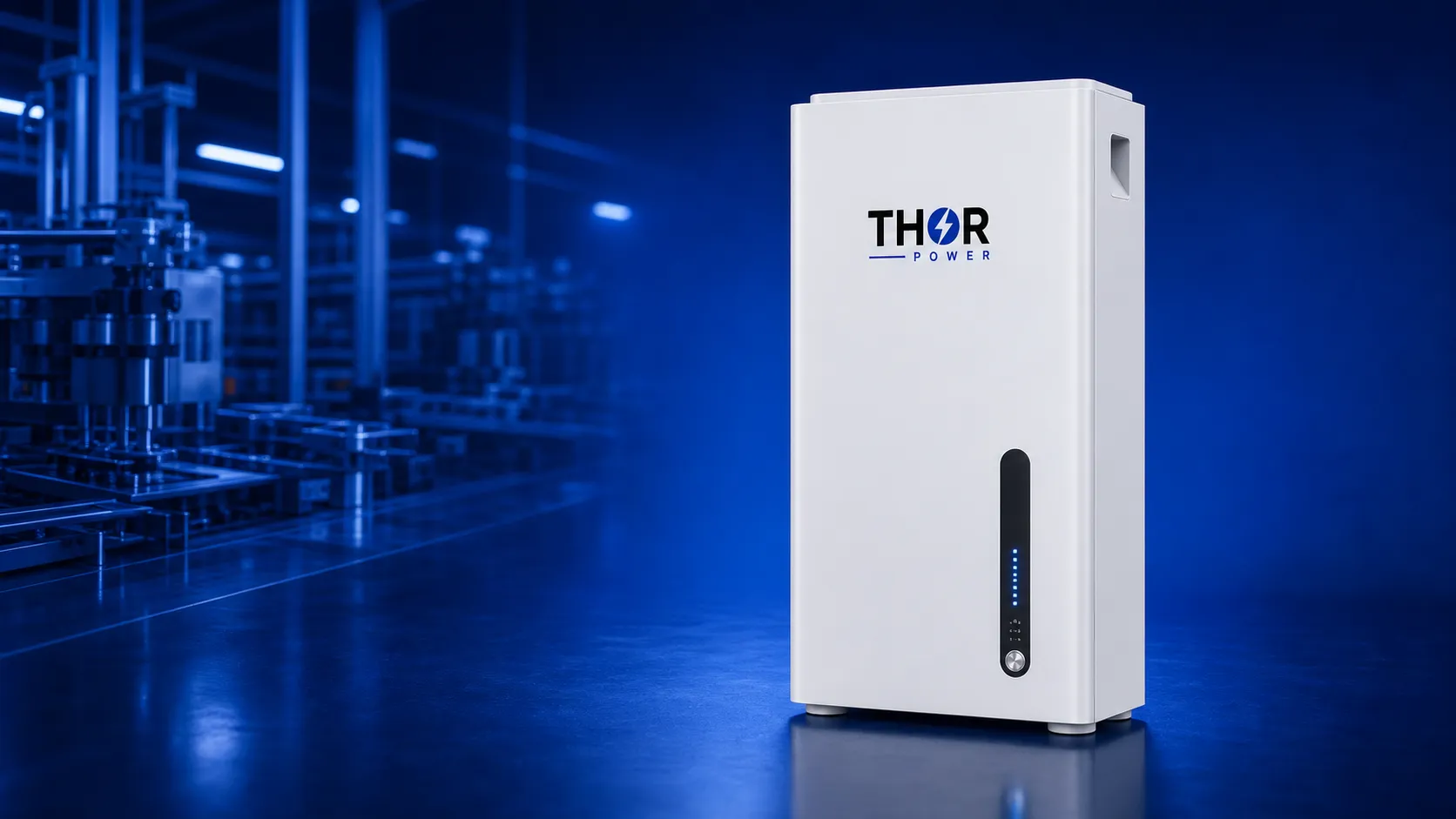
Wall-Mounted THOR wall-mounted LiFePO4 energy storage battery for residential backup and solar storage systems

Wall-Mounted Energy Storage Batteries

Space-efficient LiFePO4 systems for residential and small commercial storage, designed around inverter compatibility, usable energy and installation requirements.

  • 48V / 51.2V system configurations
  • CAN / RS485 communication options
  • Scalable energy capacity
Portable THOR portable power station with an integrated LiFePO4 battery system for outdoor and emergency power

Portable Power Station Systems

Integrated portable power platforms for outdoor equipment, mobile work and emergency use, with battery, charging and output requirements reviewed as one system.

  • Runtime-based capacity sizing
  • Inverter & charger compatibility
  • AC/DC interface configuration
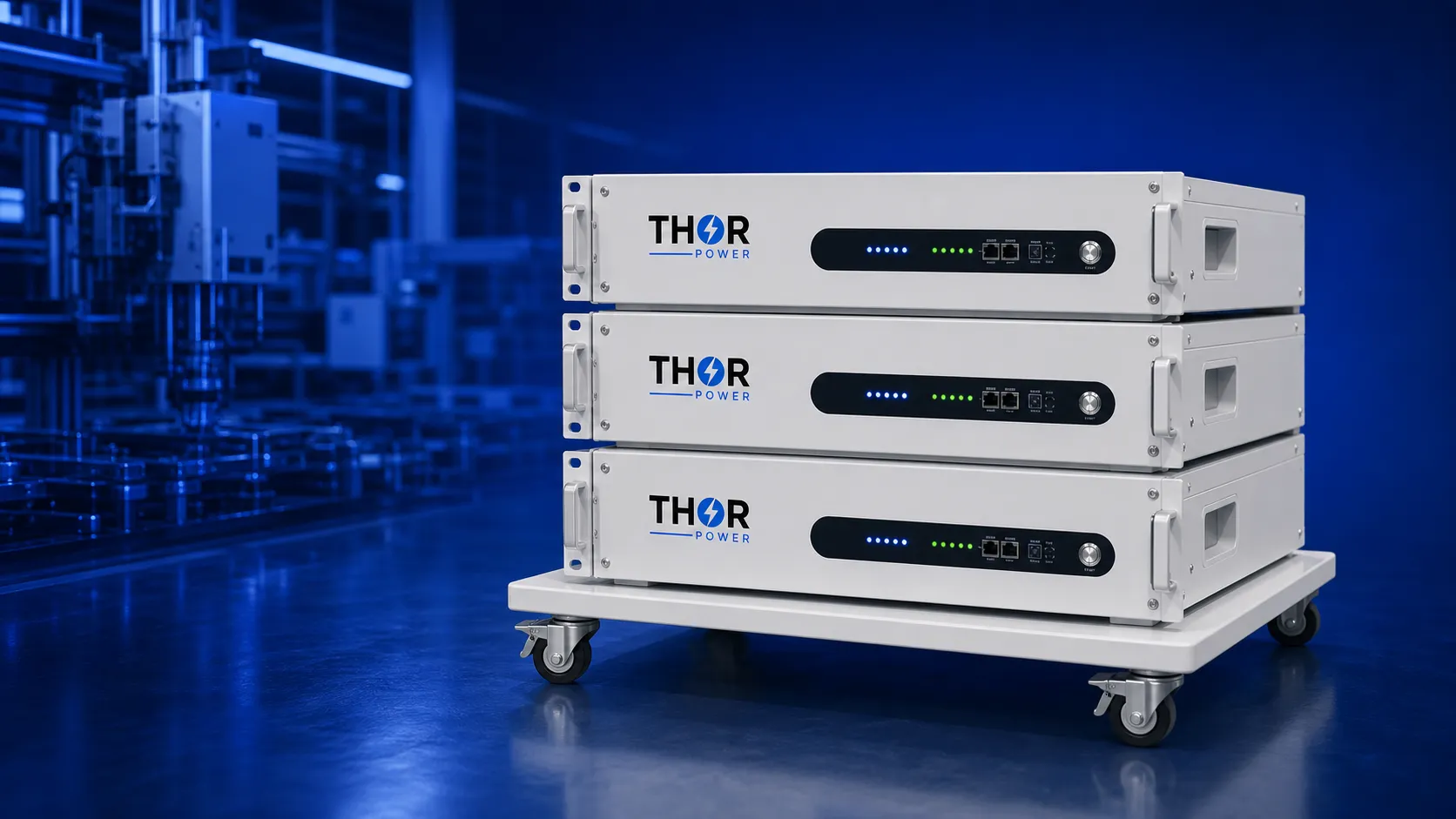
Rack-Mounted THOR rack-mounted LiFePO4 battery packs for UPS telecom and standby power systems

Rack-Mounted UPS & Standby Batteries

Rack-format LiFePO4 battery packs for UPS, telecom and equipment-room backup projects requiring organized installation and service access.

  • 19-inch rack housing options
  • Communication & parallel expansion
  • Continuous & peak load review
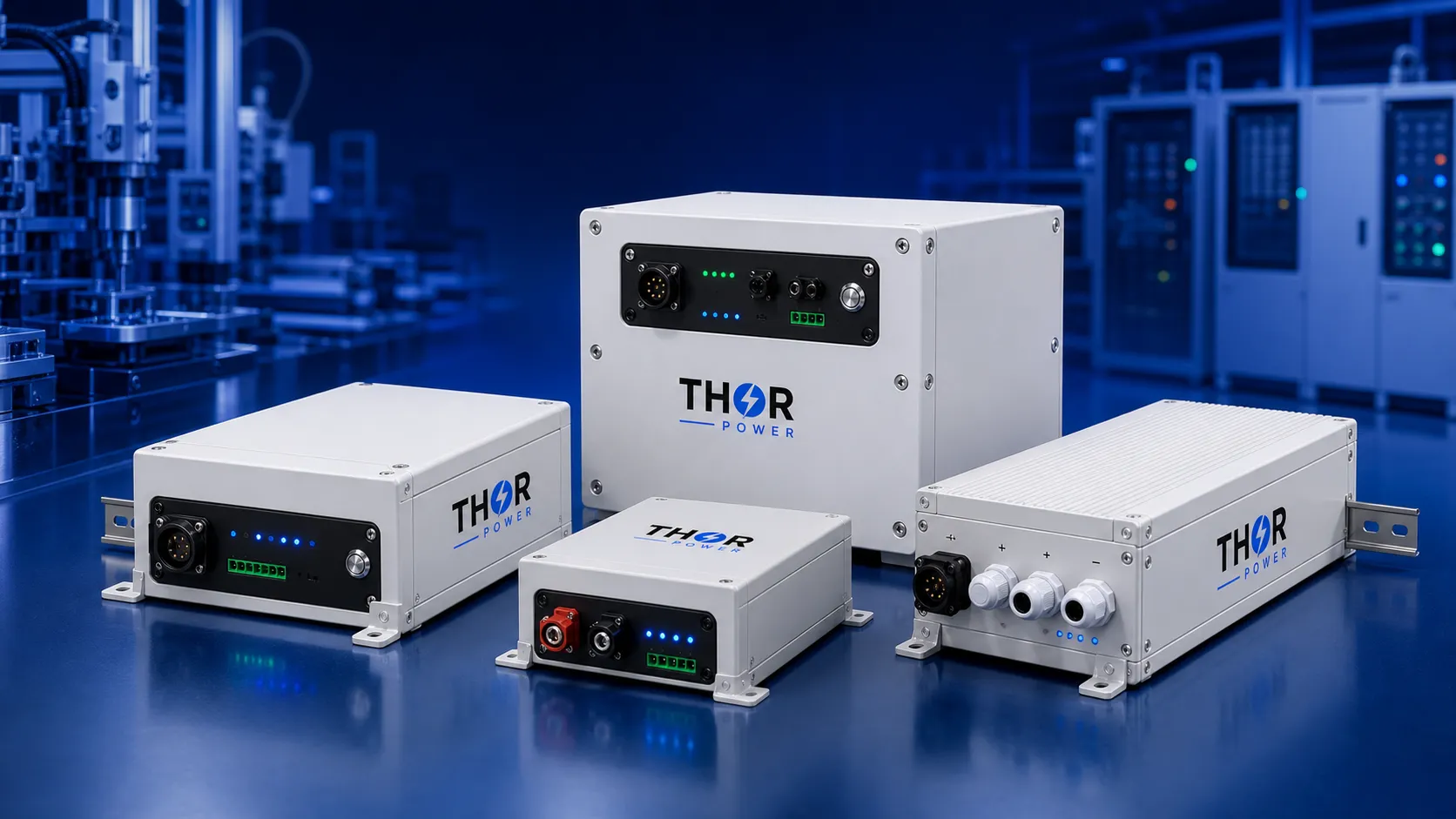
Custom Enclosed THOR custom enclosed LiFePO4 backup battery packs with metal housings BMS and configurable interfaces

Custom Enclosed Backup Battery Packs

Custom metal- or plastic-enclosed battery packs for security, monitoring and industrial equipment with non-standard electrical or mechanical requirements.

  • Custom voltage & capacity
  • Connector & wire harness options
  • Housing, interface & mounting design

Explore Our LiFePO4 Energy Storage Models

Browse representative wall-mounted, portable, rack-mounted and custom backup battery configurations. Voltage, capacity, BMS, enclosure, connectors and communication interfaces can be adapted to your project.

Battery Pack Customization

LiFePO4 Battery Pack Customization Options

Each LiFePO4 battery pack can be configured around the required voltage, energy capacity, BMS, enclosure, interfaces, communication and validation needs of the project.

From System Requirements to a Buildable Pack Specification

THOR Power converts confirmed voltage, load, runtime, charging, installation and interface requirements into an electrical, protection, mechanical and validation specification before sample development.

  • Electrical architecture
  • BMS & charging strategy
  • Housing & interface definition
  • Sample validation plan

System Voltage

Series count is configured around the required system class, charging voltage and equipment range. Common LFP platforms include 12.8V, 25.6V, 38.4V and 51.2V nominal.

Series Count Nominal Voltage Charge Voltage

Energy Capacity & Runtime

Required Ah and Wh are sized from the load profile, target runtime, discharge rate, allowable depth of discharge and system efficiency.

Ah / Wh Load Profile Runtime Target

BMS & Protection

Protection thresholds and current ratings are configured for charging, discharging, overcurrent, short circuit, temperature sensing and cell balancing.

Current Limits Temperature Sensing Balancing

Housing & Mechanical Design

Metal or plastic enclosures can be adapted around installation space, mounting points, service access, handles and internal pack structure.

Metal / Plastic Mounting Pack Layout

Charging & Output Interfaces

Charging ports, output connectors, cable gauge, polarity, fuse and switch options are selected around current demand and installation requirements.

Charging Port Connector Wire Harness

Cell Selection & Pack Architecture

Cell format, series-parallel layout, cell matching, busbar design and internal spacing are reviewed against energy and current requirements.

Series / Parallel Cell Matching Busbar Layout

Communication & System Integration

CAN, RS485, UART or other supported communication can be configured when the BMS must exchange data with an inverter, charger or host controller.

CAN RS485 UART

Labeling, Packaging & Validation

Brand labels, warning marks, packaging, sample validation and pre-production checks can be prepared before batch supply.

Custom Label Packaging Sample Validation

Explore Custom Battery Project Support

Review how THOR Power turns voltage, runtime, load, BMS, enclosure and interface requirements into a sample-ready battery pack specification.

Full-Process Quality Control

Full-Process Quality Control for LiFePO4 Cells & Battery Packs

As a source manufacturer with cell-production and battery-pack capabilities, THOR Power controls critical stages from slurry preparation, electrode coating, calendering and slitting through cell assembly, electrolyte filling, formation, aging and capacity grading, then continues verification through pack assembly, BMS testing and final shipment release.
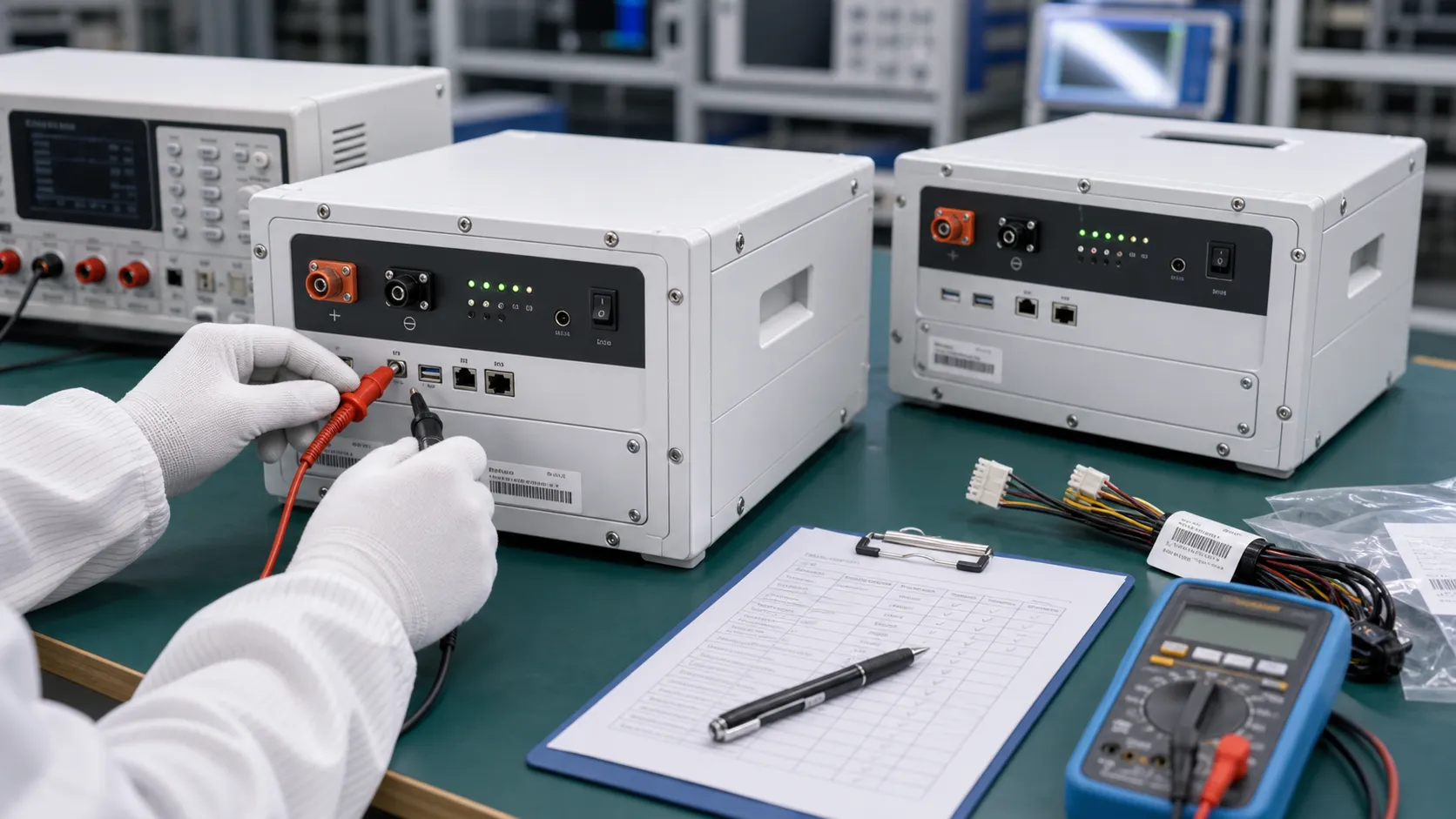
Pack QC & Final Review THOR Power technician inspecting LiFePO4 battery packs during final quality control and shipment release

Quality Control Starts with Cell Manufacturing

Battery pack consistency is determined upstream by electrode uniformity, moisture control, electrolyte filling, formation and cell grading—not only by final assembly. THOR Power combines cell-process control with pack-level inspection and electrical testing to maintain traceability from cell production through shipment.

Critical cell-process parameters recorded and reviewed
Formation, aging, capacity and internal resistance controlled
Pack assembly, BMS and final release verified against specification

Electrode Preparation & Coating Control

Slurry mixing, viscosity, solid content, coating weight, coating uniformity and electrode surface condition are monitored before calendering.

Slurry Mixing Coating Weight Uniformity

Calendering, Slitting & Electrode Inspection

Electrode thickness, compaction density, width, edge quality and burr condition are checked before the electrodes enter cell assembly.

Thickness Compaction Density Burr Control

Cell Assembly & Electrolyte Filling

Electrode alignment, tab connection, insulation, electrolyte volume, moisture control and sealing are checked according to the cell manufacturing specification.

Cell Assembly Electrolyte Sealing

Formation, Aging & Capacity Grading

Formation curves, aging results, capacity, voltage and internal resistance are reviewed before cells are graded and grouped for pack production.

Formation Aging Capacity Grading

Pack Assembly, BMS & Electrical Testing

Cell matching, busbar welding, insulation, BMS thresholds, charge-discharge behavior, output voltage, capacity and current performance are verified.

Pack Assembly BMS Charge / Discharge

Final Inspection, Traceability & Shipment Release

Appearance, dimensions, connector polarity, labeling, packing, inspection records and shipment details are checked for traceability before release.

Traceability Final QC Shipment

See How We Control LiFePO4 Battery Pack Quality

View THOR Power's process from electrode preparation and cell formation through pack assembly, BMS testing and shipment release.

Reference Product Models

LiFePO4 Cells, Home Energy Storage & Portable Power Models

Explore representative THOR Power LiFePO4 cells, home energy storage batteries and portable power stations for OEM/ODM projects. Capacity, BMS, communication, interfaces, housing, branding and packaging can be configured for your application.

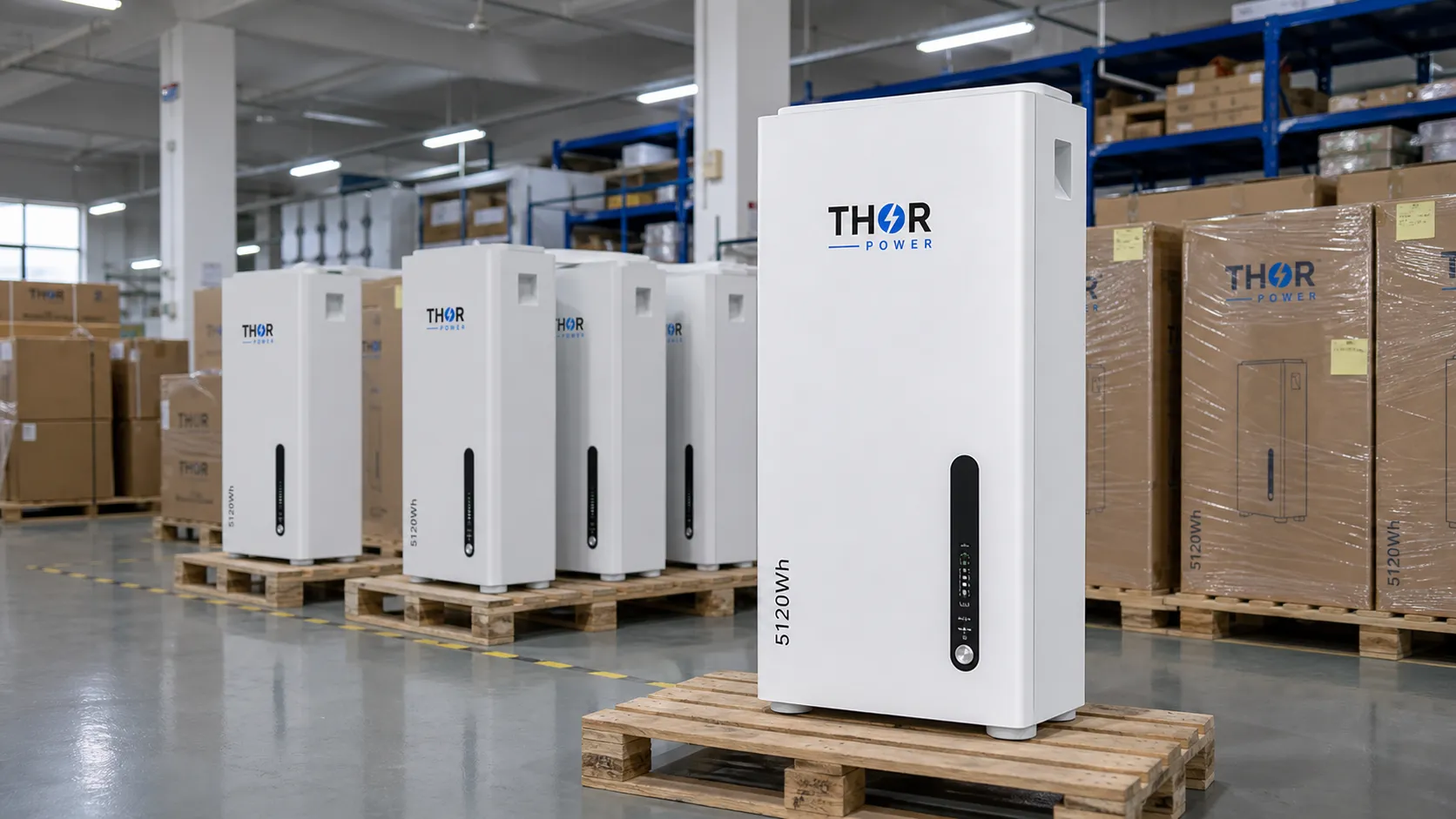
THOR Power 51.2V 100Ah 5120Wh wall-mounted LiFePO4 home energy storage batteries prepared for shipment Home Energy Storage

51.2V 100Ah 5120Wh Home Energy Storage Battery

Wall-mounted 16S LiFePO4 battery with integrated BMS, CAN/RS485 communication and parallel expansion for residential backup and solar energy storage.
51.2 V 100 Ah / 5120 Wh CAN / RS485 Wall-Mount
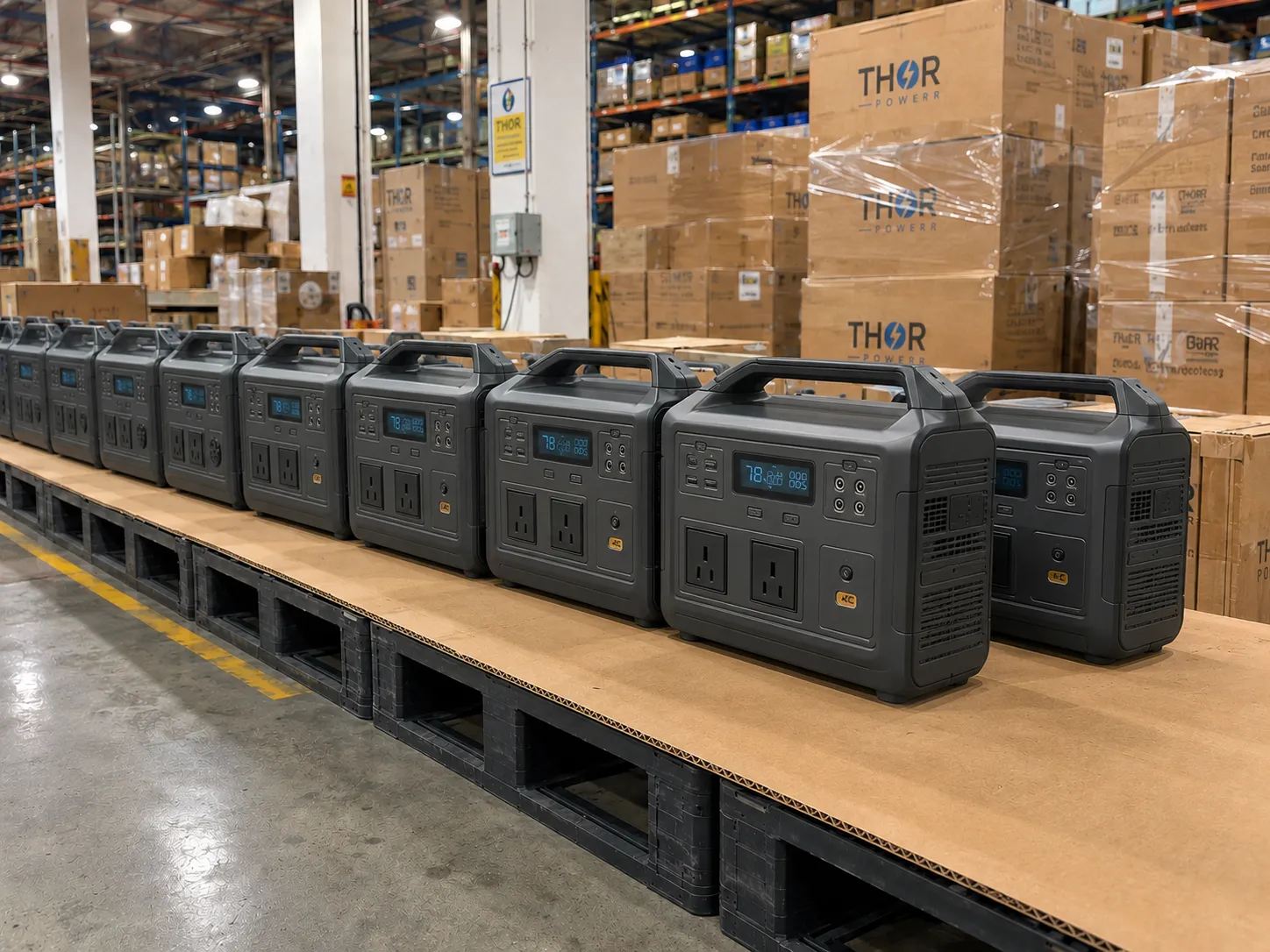
THOR 512Wh 600W LiFePO4 portable power stations prepared for OEM and private-label supply Entry Portable Power

512Wh 600W Entry Portable Power Station

Compact 512Wh LiFePO4 platform with 600W AC output for camping, emergency backup and private-label portable power projects.

512 Wh 600 W AC LiFePO4 Private Label

Typical LiFePO4 Battery Platform Options

Reference voltage, capacity and energy ranges for common LiFePO4 battery platforms. Final specifications are confirmed according to load current, runtime, charging profile, BMS, communication, housing, interfaces and certification requirements.

Reference TypeNominal VoltageTypical Capacity / EnergyTypical UseCustomization Focus
Small Backup Battery Pack12.8 V / 25.6 V10 Ah–50 AhSecurity systems, monitoring devices and compact standby powerBMS, connector, housing and output interface
Portable Power Station12.8 V / 25.6 V / 51.2 V512 Wh–2048 Wh+Outdoor power, emergency backup and mobile equipmentInverter, charging, port layout, housing and display
Home Energy Storage Battery25.6 V / 51.2 V50 Ah–200 Ah+ / 2.56 kWh–10.24 kWh+Residential backup, solar self-consumption and energy storageBMS, CAN/RS485 protocol, enclosure and parallel expansion
UPS & Standby Battery Pack25.6 V / 51.2 V20 Ah–150 AhUPS, communication backup and automatic standby systemsOutput stability, BMS protection and interface matching
Industrial Backup Battery Pack25.6 V / 51.2 V / Custom30 Ah–200 Ah+Industrial equipment backup and long-duration power supportHousing, mounting, wire harness, communication and safety review
Custom Project Battery PackProject-SpecificProject-SpecificSpecial power system or OEM/ODM battery projectVoltage, capacity, BMS, enclosure, interface and validation
Engineering note: Values shown are reference ranges for initial platform selection. Final voltage, capacity, continuous and peak current, BMS settings, communication, enclosure, interfaces and certification requirements are confirmed during engineering review.

Need a LiFePO4 Battery Solution for Your Project?

Share your voltage, capacity, runtime, load current, BMS, communication, housing, interface, quantity and certification requirements for engineering review.

Get a Battery Solution
LiFePO4 Battery FAQ

LiFePO4 Battery Pack FAQ for Energy Storage & Backup Power

Practical answers about LiFePO4 battery voltage, capacity sizing, BMS protection, 51.2V home energy storage, portable power, sample validation and project requirements.

How do I choose the right LiFePO4 battery pack voltage for my system?

Match the battery's nominal and operating-voltage range to the inverter, controller, DC bus and charger—not to capacity alone. Common LiFePO4 platforms include 12.8V (4S), 25.6V (8S), 38.4V (12S) and 51.2V (16S). The selected charger must also match the series count and final charge voltage. THOR Power confirms continuous load, peak current, charging method and equipment voltage limits before defining the pack configuration.

Why is a 51.2V 100Ah LiFePO4 battery commonly used for home energy storage?

A 51.2V LiFePO4 battery normally uses 16 cells in series: 16 × 3.2V = 51.2V. At 100Ah, its nominal energy is 51.2V × 100Ah = 5120Wh, or 5.12kWh. This platform suits many 48V-class home energy storage inverters, but compatibility still depends on the inverter voltage window, BMS current rating and CAN/RS485 protocol. Actual usable energy is lower after discharge limits and conversion losses are considered.

How do I calculate the LiFePO4 battery capacity required for backup power?

Start with load power, required runtime, system efficiency and usable depth of discharge:

Required energy (Wh) = Load (W) × Runtime (h) ÷ Efficiency ÷ Usable DoD

For example, a 500W load for 4 hours, assuming 90% efficiency and 90% usable DoD, requires about 2469Wh. At 51.2V, this is about 48.2Ah before allowances for peak load, inverter standby use, temperature and aging. Final sizing should be checked against both continuous and surge power.

What protection and communication functions should a LiFePO4 BMS include?

The BMS should provide overcharge, over-discharge, overcurrent, short-circuit and temperature protection, together with cell balancing and appropriate continuous and peak current ratings. Energy storage projects may also require contactor control, pre-charge logic and multiple temperature sensors. For inverter-connected systems, CAN or RS485 communication must use a protocol compatible with the target inverter; having the same connector does not guarantee communication compatibility.

Why do LiFePO4 battery packs with the same voltage and capacity perform differently?

Nameplate voltage and Ah do not describe the complete battery. Performance also depends on cell grade, capacity tolerance, internal resistance, cell matching, busbar and weld quality, BMS current limits, wiring resistance, temperature sensing and enclosure thermal design. These factors change voltage sag, heat generation, usable capacity and cycle life under load. Battery packs should therefore be compared at the required current, temperature and duty cycle—not by voltage and capacity alone.

Can a LiFePO4 portable power station be customized with AC, DC and USB outputs?

Yes. A portable power station is a complete power system rather than only a battery pack. Its battery, BMS, inverter, AC socket type, continuous and surge power, DC outputs, USB-A/USB-C PD ports, MPPT input, charger, display and thermal design must be engineered together. THOR Power can review housing, port layout, display UI, branding and packaging, while AC voltage, frequency and socket configuration are selected for the target market.

What should be tested before mass production of a LiFePO4 battery pack?

Sample validation should confirm cell capacity and internal resistance, pack voltage and capacity, BMS protection thresholds, continuous and peak discharge, charging behavior, temperature rise, thermal protection, connector polarity and enclosure fit. Projects with communication should also verify CAN/RS485 operation and inverter compatibility. Final testing should reproduce the actual load, runtime, charger, ambient temperature and installation conditions before the design is released for batch production.

What information should I provide for an accurate LiFePO4 battery quotation?

Send the required nominal voltage, continuous and peak load current, target runtime or energy, charging method, installation space, operating temperature and application. Also specify BMS functions, CAN/RS485 protocol, connector or output interfaces, enclosure, mounting, quantity, target market and certification needs. Existing drawings, inverter models, charger specifications, old battery samples or system test data help THOR Power review compatibility and prepare a more accurate proposal.

Need Help Choosing the Right LiFePO4 Battery Pack?

Send us your system voltage, load current, required runtime, charging method, BMS and communication requirements, installation space, interfaces, quantity and certification needs. THOR Power will review your project and recommend a practical LiFePO4 battery solution.

Talk to a Battery Engineer